

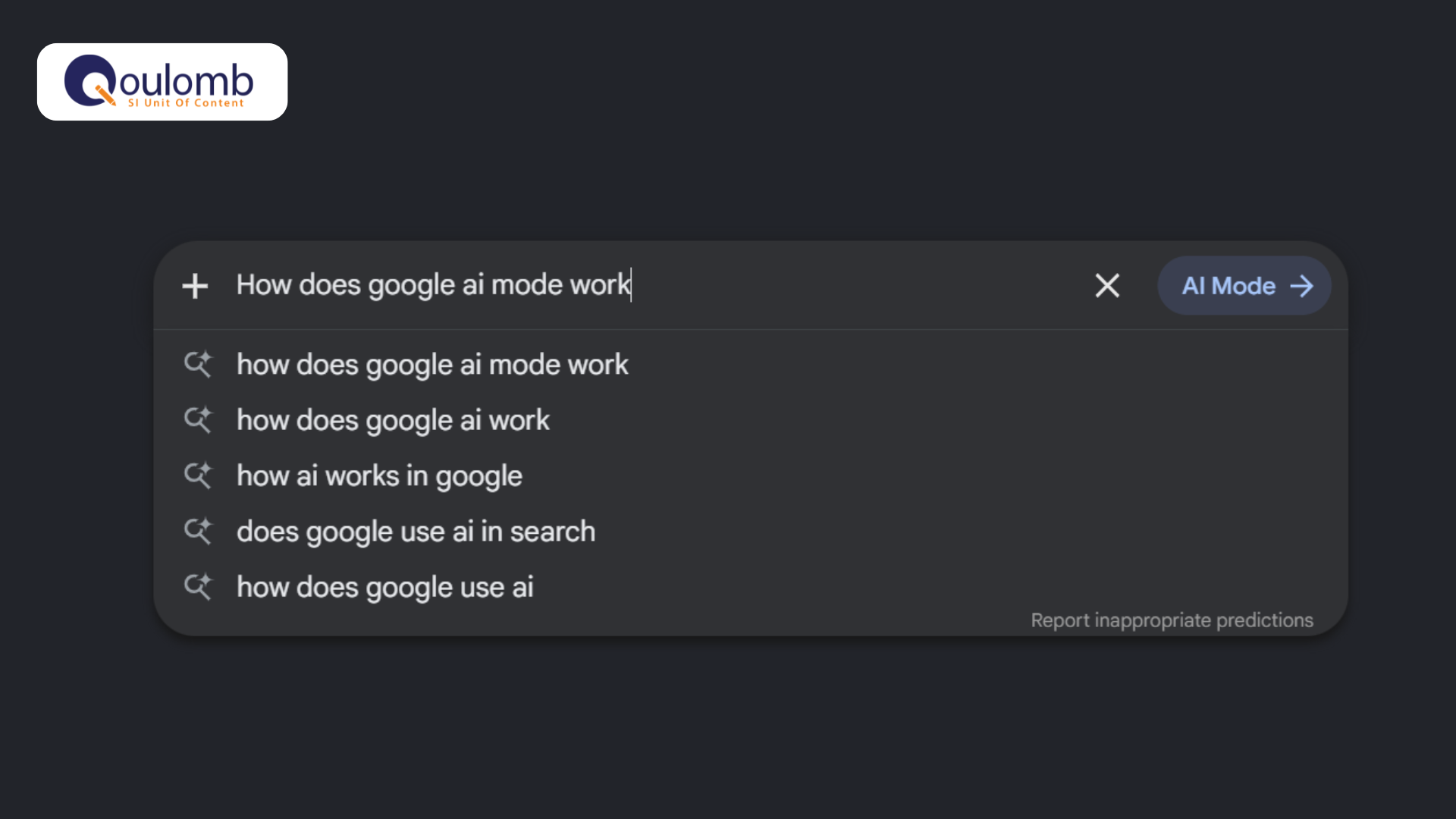
I’ve been in SEO long enough to watch Google go from a basic keyword matcher to something that now reads between the lines of your search. But what’s happening with AI Mode is unlike any update I’ve seen before. This isn’t a new ranking factor or a core algorithm tweak.
It’s a fundamental rethinking of what search is supposed to do. Instead of pointing you toward ten links and letting you figure it out, Google is now attempting to think through your question on your behalf.
And the scale of this shift is hard to ignore. According to Google, search queries in AI Mode are on average 2 to 3 times longer than traditional Google searches, sometimes even 5 times as long. People aren’t Googling keywords anymore. They’re having conversations with a search engine. If your content isn’t built for that, this is the guide you need to read.
- TL;DR
- Google AI Mode is changing search from a list of links into a conversational experience, where users get detailed answers and can ask follow-up questions in the same session.
- AI Mode uses query fan-out to break one question into multiple related searches, helping it gather deeper information and create more complete responses.
- Businesses that want visibility in AI Mode need clear, trustworthy, and well-structured content that answers user intent, not just target keywords.
- The future of SEO is about becoming a credible source that AI systems choose to cite, as brand visibility increasingly depends on AI-generated answers rather than traditional rankings alone.
What Is Google AI Mode, Really?
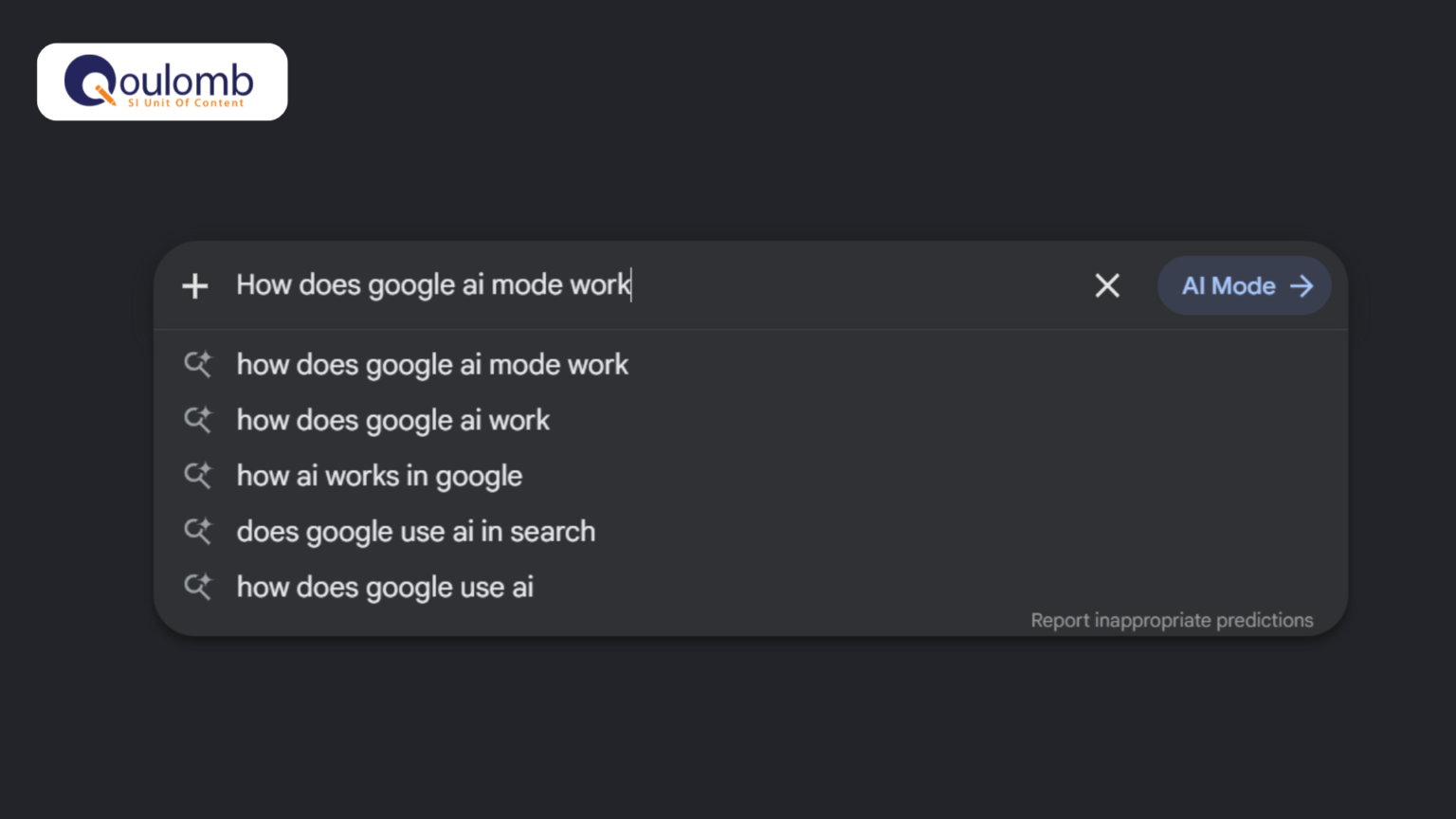
Google AI Mode is a new search experience that lets users switch from regular search results to a fully AI-generated answer, backed by links to trustworthy sources and built using Google’s Gemini 2.x model.
Unlike the brief AI Overviews that sometimes appear at the top of Search, AI Mode is a separate tab or full-screen view on mobile, designed to handle complex, multi-step, or comparison-style queries without requiring users to run multiple searches.
Think of it this way: traditional Google search is like being handed a map. AI Mode is like having someone who has already read every guide, compared every option, and can now walk you through the answer while you sit back and ask follow-up questions.
The key distinction is scope. AI Overviews were a supplement layered on top of traditional search. AI Mode is its own search experience, designed for an entirely different kind of query.
Google AI Mode changes how people discover information by delivering answers directly, making visibility more important than rankings alone

Founder
z
Sourabh Yadav
The Engine Behind It: How Google AI Mode Actually Works
Step 1: Understanding Intent, Not Just Words
When you type something into AI Mode, it doesn’t treat your words like a set of keywords to match. The system begins by understanding what you are trying to learn, focusing on the purpose behind the question.
It considers the context of your query, how you have framed it, and whether you are looking for an explanation, a comparison, or a broader understanding of a topic.
This is significant. Traditional search was largely syntactic. AI Mode is semantic, and then some.
Step 2: Query Fan-Out (This Is Where It Gets Interesting)
When you type a question into AI Mode, something called “query fan-out” happens behind the scenes. Query fan-out is the process where AI Mode takes your single search query and breaks it into multiple sub-questions, then fires off searches for all of them at the same time.
Not one search. Many searches running in parallel, pulling from different parts of the web and from Google’s own data.
Let me make that concrete. Say you ask: “Which CRM should I use if I run a 10-person consultancy and my team is remote?” A traditional search would match that to a few CRM comparison articles.
AI Mode using query fan-out would simultaneously search for CRM tools suited for small teams, CRM features for remote collaboration, pricing comparisons for SMB-focused CRMs, and user reviews segmented by team size. Then it synthesizes all of that into one answer.
The AI independently creates several supplementary search queries to gather additional information, also based on user context, retrieves suitable content from the web not just for the main query but for all generated secondary queries, and then the final answer is compiled from various sources and formulated in natural language.
“Query fan-out is the mechanic that most businesses haven’t wrapped their heads around yet,” says Vivek Mishra, Co-Founder of Qoulomb.
“Your content isn’t just competing to answer one question anymore. It’s competing to be useful across a cluster of related sub-questions that the user never even typed. If your page only answers the surface question, it’s going to get passed over for content that goes three levels deeper.”
Step 3: Context Integration
Google uses user signals like location, device, previous search queries, Gmail or Maps data, everything that helps better understand the question. With user permission, AI Mode can personalize responses based on your calendar, your past searches, and even emails. This is what makes AI Mode feel different from any other search experience. It’s not just intelligent; it’s contextualized to you specifically.
Step 4: Model Selection and Specialized Processing
AI Mode typically runs on the Gemini 2.0 model. If you’re a Google One AI Premium subscriber, you can upgrade to Gemini 2.5 Pro through a feature called “Deep Search,” which is better suited for complex reasoning, math, or coding tasks.
Depending on the nature of the query, different specialized AI models handle different jobs: extraction, summarization, comparison, or decision support.
Step 5: Synthesis and Display
The result appears as a structured, readable response with source links you can click through to verify or explore further. When the system isn’t confident in its AI-generated answer, it falls back to showing a traditional list of web links, ensuring diverse and credible sources remain visible.
Most brands don't know how visible they are in AI search
Get a clear view of your AI search presence and competitor gaps
AI Mode vs AI Overviews vs Traditional Search: The Actual Differences
A lot of people are using these terms interchangeably. They shouldn’t be.
AI Overviews are the AI-generated summaries that appear at the top of standard Google search results when you ask a natural language question. They are quick, concise, and designed to give you a fast answer without needing to click into a link. AI Overviews are great for simple questions, but they are not built for complex, back-and-forth research sessions.
AI Mode is a full, dedicated search experience that handles in-depth research, follow-up questions, and longer conversational sessions.
To be even clearer: if AI Overviews are the quick executive summary at the top of your search results page, AI Mode is the full research session. And Gemini, Google’s standalone AI, is a separate product entirely that operates outside of Google Search.
Here’s how they actually stack up:
| Aspect | Traditional Search | AI Overviews | AI Mode |
| What you see | Ranked links | Short AI paragraph + links | Long synthesized answer + images, tables, links |
| Interaction | One-time results | Basic follow-ups | Full conversational thread |
| Best for | Quick facts, navigational queries | Overview of a topic | Deep research, planning, comparisons |
| Personalization | Minimal | Limited | Comprehensive with account data |
For businesses, staying visible in AI driven search means creating content that is clear, trustworthy, and easy for AI systems to understand and reference

Founder
Vivek Mishra
Key Features You Need to Know
Conversational Follow-Ups
After you get an AI-powered response, you can ask follow-up questions directly in the same session. AI Mode remembers the context of everything you asked before, so you don’t need to repeat yourself. This transforms search from a series of isolated queries into an actual research dialogue.
Deep Search
Deep Search is the most advanced research function in AI Mode. It can execute hundreds of search queries simultaneously, analyze the results, and create a comprehensive, fully cited report. For complex research that would normally take hours, Deep Search delivers well-founded answers within minutes.
Multimodal Queries
You can ask questions via text, voice, or images using Google Lens, and follow up with additional questions, making AI Mode a hybrid between a search engine and a chatbot.
Agentic Capabilities
This is where things get into genuinely new territory. AI Mode can actively take over tasks for the user. Instead of just providing information, AI Mode can actively search for the best ticket offers for an event, compare prices, and prepare the purchase process.
It can suggest restaurant reservations based on preferences and availability or coordinate appointments for local services. Google calls this Agentic Search, and it’s still rolling out.
Personalized Intelligence
With user permission, AI Mode can access personal data from the Google account to deliver tailored answers. AI Mode can consider appointments from your calendar when you search for restaurants or recognize travel plans from your Gmail confirmations to provide suitable local recommendations.
“The personalization layer is what should concern every local and mid-market brand the most,” says Sourabh Yadav, Co-Founder of Qoulomb. “
Two people searching the exact same query can get completely different answers based on their history, location, and preferences. That means there’s no single search result to chase anymore. Brands need to think about whether they show up across multiple user contexts, not just for one version of the query.”
What This Means for SEO and Content Strategy
I want to be direct here, because a lot of what I’m reading across the industry is either panic or false reassurance.
Google has stated that no special SEO changes are needed to appear in AI Mode. If your page is already indexable and qualifies for a snippet, it can also be used in AI-generated answers. That’s the reassuring part. Here’s the more important part: the floor for what “indexable and useful” means has risen considerably.
Content that is tightly focused, well-structured, and written to answer a specific intent is easier for Google to interpret. Pages that try to cover too many ideas at once or rely heavily on keyword repetition are less effective in this environment.
The shift AI Mode creates for content creators isn’t about writing for AI. It’s about writing for humans so clearly and thoroughly that AI can understand and use it.
What actually helps you show up:
In-depth, evergreen content can earn more clicks. Pages that answer a topic thoroughly may get cited in follow-ups, expanding your exposure. Original data gives you an edge because AI cannot replicate unique research, product specs, or original visuals, making such content more valuable. Thin content may be filtered out, as pages with little added value are less likely to be cited or clicked.
Internal linking becomes especially important here, and it’s one of the most overlooked items on any technical SEO checklist. When pages are connected thoughtfully, Google’s AI systems can better recognize topical depth and relevance across the site, supporting both traditional rankings and visibility within AI-powered search results.
What matters more than ever:
- Clear, focused answers to specific questions
- Descriptive headings that reflect how people actually search
- E-E-A-T signals: author bios, cited sources, original insights
- Structured data where relevant (FAQs, how-tos, product specs)
- Topical depth across interlinked pages, not isolated articles
“We keep telling clients: stop asking how to rank in AI Mode and start asking whether your content deserves to be there,” says Vivek Mishra, Co-Founder of Qoulomb.
“Google’s AI is essentially running a credibility check on everything it considers. If your content was built to game a ranking system rather than genuinely help a reader, it won’t survive that check. The businesses investing in real depth right now are the ones that will be referenced when their competitors are invisible.”
Google AI Mode is transforming how businesses get discovered online
Learn how to stay visible as AI search continues evolving
Will AI Mode Affect Organic Traffic?
This is the question everyone’s asking, and the honest answer is: it’s complicated, and the data is still early.
Google reports that traffic from AI-generated answers tends to have higher dwell time and lower pogo-sticking, suggesting that users who click through from AI Mode find the content genuinely useful. This means traffic from AI Mode may be smaller in volume but more qualified in intent.
Pages can influence search outcomes even if they don’t appear as the top blue link, as long as the content is clear, well-structured, and useful enough for Google to reference in its responses.
The definition of “visible” is changing. Being referenced inside an AI response is a new form of visibility, one that doesn’t always come with a click but does come with brand exposure.
“Traffic volume is the wrong metric to fixate on right now,” says Sourabh Yadav, Co-Founder of Qoulomb.
“We’re already seeing clients get referenced in AI Mode responses with no corresponding spike in sessions, but their lead quality goes up because the people who do click have already been pre-sold by the AI’s answer. The funnel is compressing. What used to take three search sessions and five clicks is now happening in one conversation. Brands that show up in that conversation are closing faster.”
The Bottom Line
Google AI Mode isn’t the end of SEO. It’s the end of SEO strategies that focus only on rankings without delivering real value. With features like query fan-out, intent interpretation, conversational follow-ups, and multimodal search, AI systems are designed to surface content that is genuinely useful, trustworthy, and relevant.
The key question is no longer “How do I rank in AI Mode?” but “Would an AI platform choose my content as a source?” Brands that can answer that question confidently will be in a much stronger position to earn visibility, citations, and qualified traffic.
For B2B companies, that visibility must also translate into business outcomes. At Qoulomb, we help brands build authority across both traditional search and AI platforms through an integrated GEO, AEO, AI SEO, and SEO strategy. The focus isn’t just on rankings or citations, it’s on creating sustainable AI search visibility that supports lead generation, pipeline growth, and revenue.
As AI search continues to evolve, the brands that invest in useful content, strong authority signals, and AI-ready optimization today will be the ones generating more visibility, more leads, and more growth tomorrow.
Frequently Asked Questions (FAQs)
1. Is Google AI Mode the same as AI Overviews?
No. AI Overviews are the short AI-generated summaries that appear at the top of your regular search results for certain queries. They’re quick and supplementary. AI Mode is a completely separate tab and search experience designed for longer, more complex questions where you want to go back and forth, ask follow-ups, and get a thorough synthesized answer rather than a paragraph-length summary.
2. Do I need to change my SEO strategy to appear in AI Mode?
Google has confirmed that no special technical changes are required. If your content is already indexable and useful enough to appear as a snippet, it’s eligible to be referenced in AI Mode responses.
3. Will AI Mode reduce traffic to my website?
It may change the nature of your traffic more than the volume. Users who click through from an AI Mode response tend to be further along in their research, which means higher intent and better lead quality.
4. How does query fan-out affect the kind of content I should create?
Query fan-out means Google isn’t just matching your content to one question. It’s checking whether your content is useful across a whole cluster of related sub-questions that the user didn’t explicitly type. A page that answers only the headline question is easier to overlook than a page that also addresses the surrounding context, the common follow-ups, and the nuances that a genuinely curious reader would care about.
5. Can any business show up in Google AI Mode, or is it only for large brands?
Any business with crawlable, well-structured, and genuinely useful content can be referenced in AI Mode responses. Domain authority still plays a role, but AI Mode has shown a willingness to cite smaller, specialist sources when their content is clearer and more focused than what larger sites offer on the same topic.
6. How can Qoulomb help my business navigate Google AI Mode?
At Qoulomb, we work with businesses to build the kind of topical authority and content depth that AI Mode rewards. That means going beyond surface-level keyword strategies and building content ecosystems where every page earns its place by genuinely answering something your audience is searching for.