

Google does not rank pages only by keywords and links anymore. It also checks if the information is correct, helpful, and made by trustworthy people or sites. This is why content quality is now a big part of SEO. One big idea inside Google’s quality rules is E-E-A-T. It helps search engines see if a site gives good information and a good experience to its readers.
As search engines get smarter, businesses are paying more attention to trust, expert content, and honesty signals to grow their visibility online. These things help a website build authority and get steady traffic over time.
In this blog, you will learn what EEAT in SEO means, why it matters for SEO, how it connects to EEAT ranking factors, and simple steps you can take to make your website more trustworthy and well-known.
- TL;DR
- E-E-A-T in SEO is a system Google uses to check content quality. It looks at experience, expertise, authoritativeness, and trustworthiness. Strong E-E-A-T signals help search engines know if content is safe, correct, and useful for people.
- Google EEAT guidelines matter a lot for websites about serious topics, like money, health, law, and business. When a site is more trustworthy, it often shows up higher in search and gets more trust from readers.
- Building authority in SEO takes more than just using the right keywords. Websites need content made by real experts, sources people can trust, clear author names, and steady quality to prove they are credible.
- A good E-E-A-T SEO plan mixes expert content, trust signals, good technical setup, and topic authority. This helps a site rank well for a long time and keep up with new changes in search.
What Is EEAT in SEO and Why Is It Important?
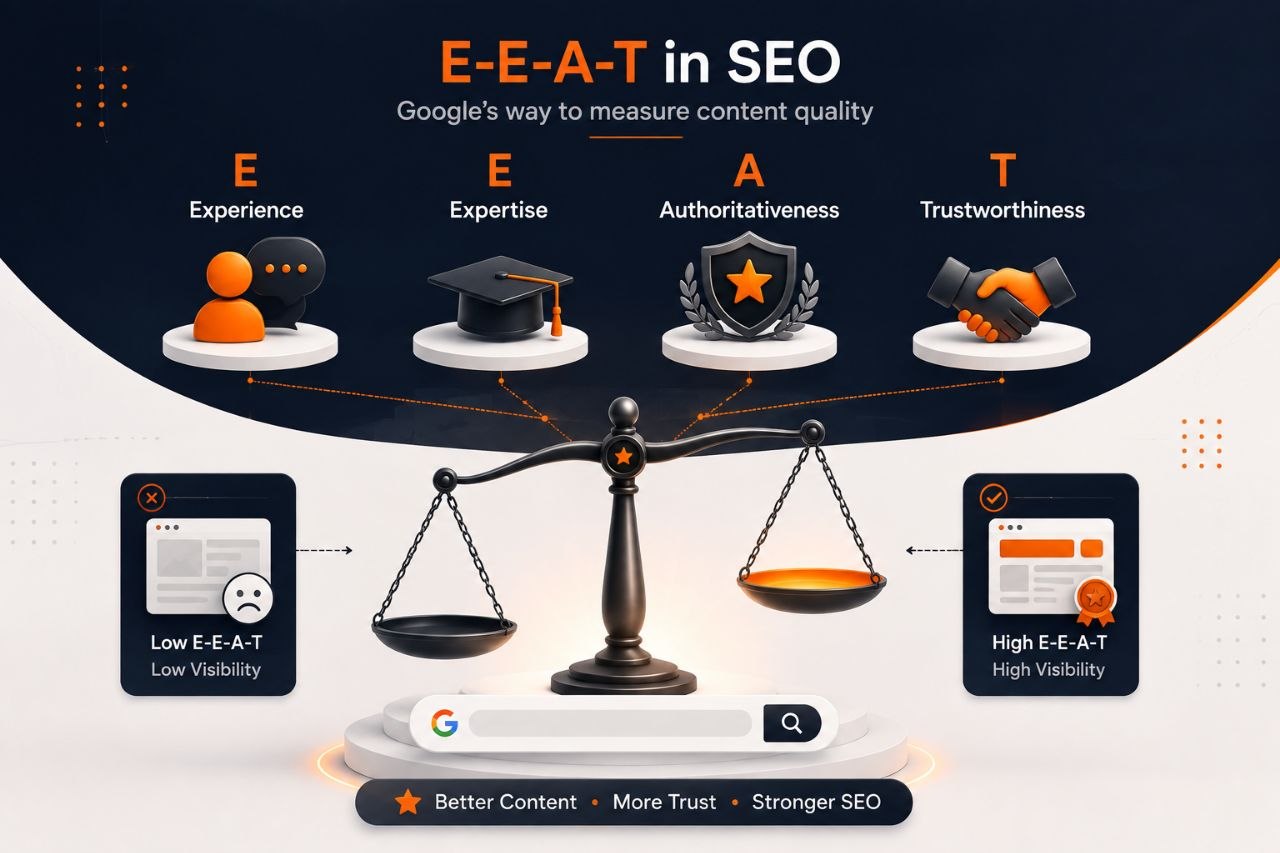
E-E-A-T stands for Experience, Expertise, Authoritativeness, and Trustworthiness. Google uses this idea to check how good and trustworthy a piece of content is. These signals help search engines know if information is helpful, correct, and made by reliable sources.
For example, say two websites write about personal finance. Google is more likely to trust the one written by a real finance expert who shares correct facts and good sources. This shows stronger quality and authority.
E-E-A-T does not directly decide your rank. But it still shapes how search engines judge your content and how useful it is to readers. Strong E-E-A-T signals can help your site get more visibility, more trust, and better long-term SEO results.
Most brands don't know how visible they are in AI search
Get a clear view of your AI search presence and competitor gaps.
Why Is E-E-A-T Important?
1. Improves Content Quality Evaluation
Google uses quality signals to see if content gives correct and useful information. Sites that show real experience, skill, and honesty are seen as more valuable. This helps search engines find content that deserves better placement in search results.
2. Builds User Trust and Credibility
People trust content more when they know who wrote it and why that person is qualified. Clear author details, good sources, and correct facts help build confidence and make readers want to stay on your site.
3. Supports Better Visibility in Search Results
Websites with stronger trust signals often do better over time, because search engines like to show content that is truly useful. Good information backed by skill and trust helps a website compete for important searches.
4. Strengthens Performance for YMYL Topics
YMYL means “Your Money or Your Life.” These are topics that can affect a person’s health, money, safety, or big life choices. Because these topics matter so much, Google wants this content to be correct, trustworthy, and written by people who know the subject well.
Strong E-E-A-T signals help search engines find safe, correct information and show it to people with more confidence.
5. Helps Build Long-Term Authority
Sharing helpful, correct, and trustworthy content again and again helps a website build authority in its field. Over time, this can improve your brand’s name, bring in more readers, and give you a strong base for steady growth.
A big share of users, about 78%, trust official .gov websites, while only 59% trust business websites. This is because Google treats government sites as a strong example of trust and authority. |
“Strong SEO is not just about ranking higher. It is about giving people a reason to trust what they find.”

Founder
Vivek Mishra
What are the Four Pillars of E-E-A-T?
E-E-A-T stands on four main pillars. These help search engines know if content is reliable and useful for readers. Each pillar looks at a different part of content quality. Together, they help a website build trust, get more visibility, and support newer strategies like GEO.
Here are the four pillars of E-E-A-T — Experience, Expertise, Authoritativeness, and Trustworthiness — that every website should know.
1. Experience: Demonstrating First-Hand Knowledge
Experience means knowledge gained by actually using a product, service, or being part of a situation. Google likes content built from real experience, because it often gives useful details and honest ideas that you can’t just find through simple research.
For example, a traveler who shares tips after visiting a place is giving real, first-hand experience. This can help other readers plan their trip better.
2. Expertise: Showcasing Subject Matter Knowledge
Expertise means having strong knowledge about a topic through school, training, or work experience. Search engines like content made by people who really know the subject, because it is more likely to be correct and helpful, and it answers readers’ questions the right way.
For example, a certified nutritionist writing about healthy eating shows real expertise. Readers can trust this kind of health advice more.
3. Authoritativeness: Building Industry Recognition
Authoritativeness is the good name a person, brand, or website earns in its field. It grows when other trusted websites, experts, or publishers talk about or link to your content.
Strong authority signals help search engines see that your information is safe, valuable, and worth showing to more people.
For example, a company that many industry websites talk about, and that shows up in GEO-driven search results, may be seen as a more trusted source by both readers and search engines.
4. Trustworthiness: Establishing Credibility and Reliability
Trustworthiness is about being correct, honest, and reliable. It is often called the base of E-E-A-T, because readers and search engines need to feel sure that your content is true, clear, and written with the reader’s best interest in mind.
For example, a website that shows author details, contact information, and good sources is more likely to earn the reader’s trust.
High E-E-A-T Content vs Low E-E-A-T Content
The quality of your content changes how readers and search engines see your website. Content that shows real experience, skill, authority, and trust is seen as more valuable than content that lacks these things.
The table below compares high E-E-A-T content and low E-E-A-T content. It looks at accuracy, author details, source quality, user trust, and long-term SEO value.
Factor | High E-E-A-T Content | Low E-E-A-T Content |
Content Accuracy | Checked carefully and based on research | Has claims that are not backed up |
Author Information | Shows clear author details | No name or unclear author |
Source Quality | Uses trusted links and references | Uses weak or few sources |
User Trust | Makes readers feel confident | Makes readers unsure |
Long-Term SEO Value | Keeps good rankings over time | Loses visibility over time |
Google works with about 16,000 quality raters around the world. These people check search results using E-E-A-T. Their work helps train Google’s machine learning systems. |
E-E-A-T is about showing search engines that your content comes from real experience, genuine expertise, and a source people can trust.

Founder
Sourabh Yadav
How to Improve EEAT for SEO: Strengthening Your E-E-A-T Signals
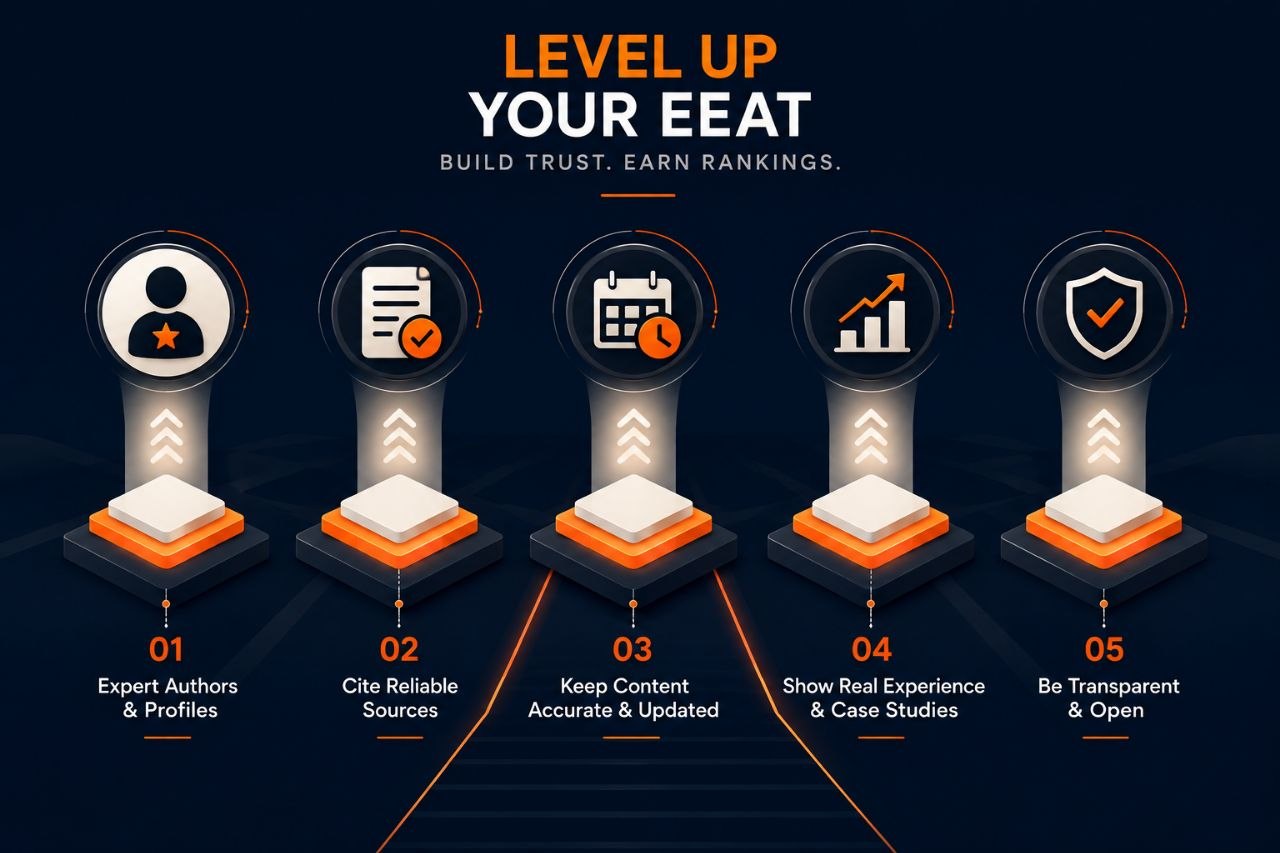
Strong E-E-A-T signals come from steady, honest effort. Websites that focus on quality, openness, and real skill are more likely to earn trust from both readers and search engines.
Here are some simple ways to build these signals over time.
1. Adding Expert Contributors and Author Profiles
Search engines want to know who made the content they rank. When a website clearly shows author profiles, skills, work experience, and achievements, it gives stronger trust signals and helps search engines judge quality better.
This also helps readers see that the information comes from someone who really knows the topic. A good author profile can list certificates, education, years of experience, and links to the author’s professional pages.
Strong author profiles help build both trust and authority.
2. Citing Reliable Sources and References
Using trustworthy sources helps back up your claims and makes your content more accurate. Search engines prefer content that uses real studies, research papers, industry reports, and official sources instead of just opinions. This makes the content more reliable for both readers and search engines.
Good sources also let readers check the facts on their own. This is becoming more important as search changes, and newer strategies like AEO focus on clear, correct, well-backed information that search engines can trust and use.
Trusted sources help build content credibility over time.
3. Maintaining Accurate and Updated Content
Content should be checked often to make sure facts, numbers, examples, and tips are still correct. Information that was true a few years ago might not match today’s standards, and this can hurt both quality and trust.
Updating your content regularly shows that you care about giving helpful information. Websites that keep their content fresh and correct are more likely to build trust, keep readers happy, and stay visible in search results.
Updated content helps build stronger authority over the long run.
4. Showcasing Real-World Experience and Case Studies
Sharing your own ideas and real experience helps your content stand out from generic information found all over the web. Publishing case studies, research findings, and real results shows that your website has direct knowledge in its topic area.
Many GEO agencies for startups build their authority by sharing real results from past projects and what they learned. This kind of content gives unique value and helps readers and search engines see real experience.
Real examples help build stronger trust signals.
5. Improving Website Transparency
Being open and clear helps readers feel safe using your website. Search engines also look at trust signals when checking content quality. Clear business details, easy-to-find policies, and correct company information show that a website acts honestly and openly.
Common trust signals include contact information, an About Us page, privacy policies, a safe HTTPS connection, and reviews from real customers. Transparency helps make a website more trustworthy. This is one of the easiest ways to improve EEAT for SEO over time.
SEO is becoming a key growth channel for brands
Learn how top SEO agencies help brands grow
Final Thoughts
E-E-A-T in SEO plays a big role in how search engines judge content quality and trust. Websites that show real experience, strong skill, industry authority, and honesty are better able to make content that truly helps both readers and search engines.
Building strong E-E-A-T signals takes steady work. Businesses need to share correct information, use trusted sources, keep content updated, and show real experience. Being more open and keeping high quality also helps build reader trust and long-term SEO success.
As AI search keeps changing, agencies like Qoulomb, an AI SEO and GEO agency that helps brands get quality leads and revenue through visibility on Google and AI tools, help businesses build stronger content, grow authority, and match their SEO plans with today’s search standards.
Frequently Asked Questions (FAQs)
1. What does E-E-A-T stand for in SEO?
E-E-A-T in SEO stands for Experience, Expertise, Authoritativeness, and Trustworthiness. It is part of Google’s system for checking if content is trustworthy and useful. These ideas help search engines find good information and give readers better search results.
2. Why is E-E-A-T important for search rankings?
E-E-A-T helps search engines check content quality, trust, and reliability. It is not one of the direct EEAT ranking factors, but strong E-E-A-T signals still help with visibility, reader trust, and long-term SEO success. Content that follows Google EEAT guidelines often does better in busy, competitive search spaces.
3. Is E-E-A-T a direct ranking factor?
No, E-E-A-T is not one of the direct EEAT ranking factors. But it still shapes many signals that Google uses to judge content quality. Websites that show experience, expertise, authority, and trust are more likely to match Google’s quality standards.
4. How can websites improve their E-E-A-T signals?
Websites can improve EEAT for SEO by sharing expert-made content, keeping information correct, using trusted sources, building clear author profiles, and growing trust signals on their site. Steady quality and strong topic knowledge also help build better E-E-A-T over time.
5. What is the difference between expertise and authoritativeness?
Expertise is the knowledge and skill a content creator shows. Authoritativeness is how well-known and respected a person, brand, or website is in its field. Expertise helps you make good content, while authority helps prove that content is trustworthy.
6. Why is trustworthiness considered the foundation of E-E-A-T?
Trustworthiness is seen as the most important part of E-E-A-T, because readers need to feel sure they can rely on your information. Correct content, being open, safe websites, and honesty all help build trust and make content more credible in SEO.
7. Does E-E-A-T matter only for YMYL websites?
No, E-E-A-T helps all websites, not just YMYL ones. But it matters even more for YMYL topics like money, health, and legal advice, because wrong information here can seriously affect a person’s choices and well-being.