

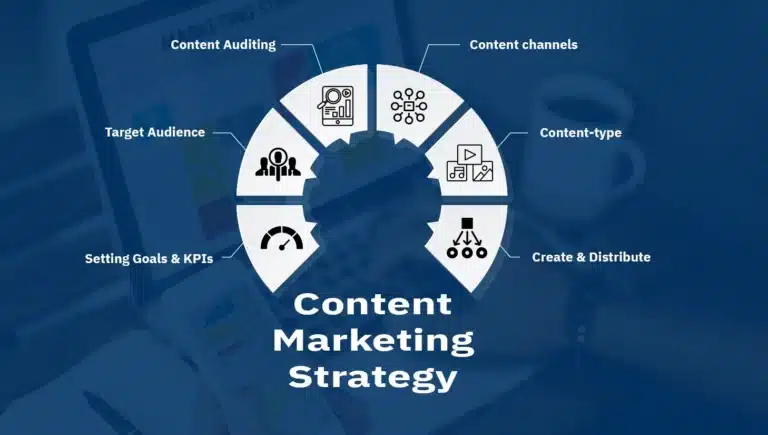
A content marketing strategy guide helps businesses create, publish, and distribute valuable content that attracts the right audience and drives measurable business growth. Without a documented strategy, even high-quality content often fails to generate traffic, leads, or conversions. In this guide, you’ll learn how to build a successful content marketing strategy step by stepfrom defining business goals and buyer personas to creating a content calendar, distributing content, and measuring ROI.
Despite these incredible numbers, many businesses fail to see a return on their investment. The primary reason is simple: they operate without a documented content strategy. Currently, only 63% of businesses take the time to document their strategy, which explains why so many struggle to gain traction. Having a documented marketing strategy can increase your odds of success by 313%.
- TL;DR
- This content marketing strategy guide explains why businesses fail when they operate without a documented, goal-driven content strategy.
- Documented strategies succeed by defining SMART goals, mapping buyer personas, and organizing a consistent content calendar.
- Content repurposing and analytics maximize ROI by turning pillar pieces into multiple formats and tracking performance KPIs.
What is a Content Marketing Strategy?
A content marketing strategy is a structured approach to creating and distributing content to a specific target audience to hit clearly defined goals. It answers the foundational questions of your campaigns: Why are you creating it, for whom are you creating it, and how will you execute it?
The divide between a struggling campaign and measurable business growth is a documented content marketing strategy. Without clearly defining your audience, distribution channels, and KPIs, even the highest-quality content simply becomes noise.

Founder Sourabh Yadav
aka Marketing Maniac
The 5 Pillars of a Successful Content Marketing Strategy
Before implementing your content marketing strategy, it must be built on five solid pillars.. Answering these basic questions will give your entire campaign clarity.
-
Your Business Case: What goals do you want to achieve? Understand your reason for creating content, the risks involved, and exactly what success will look like for your business.
-
Brand Positioning & Story: Define your brand personality and tone. Figure out why customers prefer you over competitors and what makes your brand unique. Your brand story is what makes you stand out in a crowded market.
-
Your Unique Value: What specific value will people get from your content? In a noisy internet world, only those who help people with precious, unique resources earn attention.
-
Your Ideal Customer and Journey: Define what your ideal customer looks like, their habits, their problems, and the solutions they are actively seeking.
-
Channel & Process: Establish how you will create and deliver content. Define who is responsible for what, the formats you will prioritize, and how you will measure the results.
Content Marketing Strategy Guide: 9 Steps to Success
1. Establish Your Goals and KPIs
Setting goals is the lighthouse that navigates your ship. However, before setting metrics, you must write a clear mission statement. A strong mission statement follows this formula: “We help [Target Audience] to achieve [Business Goals] with [Content Type].”
Next, set up SMART goals (Specific, Measurable, Achievable, Realistic, Time-bound). Once your goals are set, assign Key Performance Indicators (KPIs) to measure them. If your goal is to generate leads, your specific KPI might be getting 100 ebook downloads within the next 30 days or increasing organic search traffic by 20% in three months.
2. Create Your Buyer Persona
You are not creating content for everyone. You are creating it for a specific set of people with a specific problem. To identify your audience, use data-driven methods:
Google Analytics: Go to Audience > Interests > Overview to find demographic data such as age, location, and behavior.
Social Media Analytics: Use Facebook and Instagram audience insights to gather demographic data on your existing followers.
Talk to Your Audience: Ask your current customers about their pain points, favorite content formats, and the channels they use daily.
Build a Buyer Persona document that includes their age, location, education, yearly income, behaviors, and challenges.
Content marketing only drives revenue when it transitions from a guessing game into a structured process. True authority is built by mapping your core business goals directly to the value you provide at every stage of the buyer’s journey.

Founder Vivek Mishra
aka Branding Maniac
3. Analyze Your Current Content
If you already have content assets in place, run a content audit before creating anything new. Tools can automate this heavy lifting:
-
Screaming Frog: Analyzes your URLs, creates sitemaps, and finds duplicate pages or broken links.
-
Semrush Content Audit: Checks the length of your articles, keyword utilization, backlinks, and shareability.
-
Ahrefs: Helps you find content gaps and missing keywords your target audience is searching for.
4. Find Your Content Channels
Let data dictate where you publish. If you already have website traffic, go to Google Analytics (Acquisition > Social > Overview) to see which platforms drive the most visitors.
Ponder your target audience. If you are in the fitness and food space, Instagram and YouTube are likely your best channels. If you are in the B2B space, LinkedIn and Twitter will yield the highest ROI.
5. Decide on Content Formats
A strong content marketing strategy utilizes a variety of formats mapped directly to the buyer’s journey (Awareness, Consideration, and Decision).
-
Awareness Stage: Customers realize they have a problem. Target them with blogs, short-form videos, and Canva infographics.
-
Consideration Stage: Customers look for solutions. Offer them newsletters, whitepapers, and webinars.
-
Decision Stage: Customers choose a provider. Close the deal with case studies, testimonials, and product demos.
Podcasts and video marketing are also rapidly becoming core formats for building long-term authority and credibility in any niche.
6. Create a Content Calendar and Research Topics
A content calendar keeps your team organized. You can use a simple Google Calendar to track the channel, format, topic, publishing date, and the person responsible.
To find high-intent topics, use robust content research methods:
Answer the Public: Discovers the exact questions people are asking online.
Google Related Searches: A goldmine for finding long-tail keywords.
Quora & Reddit: Platforms where people openly discuss their pain points.
Ubersuggest: Perfect for reverse-engineering your competitor’s strategy to see which evergreen topics bring them the most traffic.
7. Designate Responsibilities and Resources
Determine exactly how your workflow will operate. A typical hierarchy places the Chief Marketing Officer at the top for strategy approval, followed by a Content Marketing Manager who delegates tasks to writers, graphic designers, and video editors.
Document the workflow for every task. For a blog post, the steps might include getting keywords from the SEO manager, researching competitor articles, drafting the body, adding infographics, and sharing the draft with the editor.
8. Distribute and Repurpose
Content marketing is less about content production and more about content distribution. You must balance Owned Media (your blog and email list), Earned Media (social shares and PR), and Paid Media (search and social ads).
Creation is only a fraction of the battle; the real return on investment comes from strategic distribution. A winning strategy doesn’t just produce isolated assets, it builds a system that repurposes pillar content to maximize both reach and relevance.
Founder Sourabh Yadav
aka Marketing Maniac
Maximize your efforts through Content Repurposing. A single long-form video can be converted into an iTunes podcast, an Instagram infographic, TikTok reels, short LinkedIn clips, and a comprehensive blog post.
9. Analyze and Improve
Finally, check how your content is performing against the KPIs you set in Step 1. Focus on four major categories:
-
User Interaction: Sessions, bounce rate, unique visitors.
-
Engagement: Shares, likes, comments.
-
SEO Results: Keyword rankings, backlinks, organic traffic.
-
Company Revenue: Leads, downloads, conversion rates.
Use Google Analytics or Buzzsumo to measure these metrics. Figure out what is working, adjust what is failing, and continuously optimize your approach.
Stop guessing with your content.
Content marketing only works when it is engineered to convert. Download the Content Strategy Audit Template to align your publishing schedule directly with your revenue goals and start capturing high-intent leads today.
Content Marketing Strategy Guide: Final Thoughts
A successful content marketing strategy is built on delivering useful, credible, and engaging information. While platforms and techniques continue to evolve, documenting your strategy, understanding your audience, and measuring results remain essential for long-term growth.
You deliver that value by transitioning from a guessing game into a carefully crafted, documented strategy.