


Conversational search is a new way of searching on the internet where people can ask full questions in simple language instead of typing short keywords. AI systems understand what the user is asking and give direct and easy answers. This makes searching faster, simpler, and more natural, like talking to a person.
The topic What is Conversational Search is important today because many tools like ChatGPT, Google conversational search, and Perplexity are using this method. These systems use AI to understand meaning and intent, not just words. In this blog, you will learn how conversational search works, why it is useful, and how it is changing the way people search for information in 2026.
- TL;DR
- Conversational search is a new way of searching where users talk to AI systems using natural language instead of typing short keywords, making search more human like and easy to understand
- It uses AI conversational search engines, NLP, and intent based systems to understand full questions and give direct answers instead of just showing links
- This shift is changing SEO because search is now moving from keyword based results to chat based search systems and semantic understanding
- Platforms like Google conversational search, ChatGPT search experience, and Perplexity conversational search are leading this transformation in 2026
What Is Meant by Conversational Search?
Conversational search is a way of searching where users ask full questions in natural language and get direct answers from AI systems. It feels like a simple chat instead of typing short keywords into a search engine.
It focuses on understanding meaning, intent, and context rather than just matching words. This helps users get faster and more accurate answers without checking many different websites.
Example –
A user can ask, “What is the best time to visit Dubai?” Instead of showing only links, the AI gives a clear answer like “The best time is from November to March because the weather is cooler and better for travel.”
How Conversational Search Works
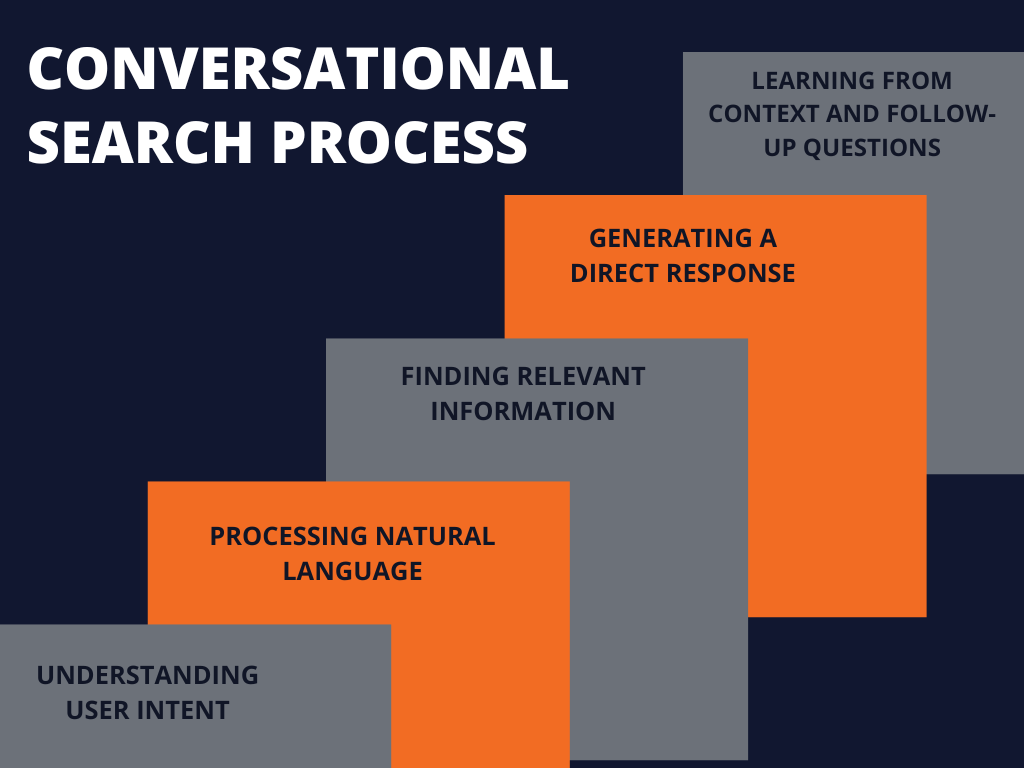
Conversational search allows users to ask questions in a natural way, similar to how they would speak to another person. Instead of focusing only on keywords, AI systems try to understand the meaning, context, and intent behind each query.
As conversational search continues to grow, strategies such as Answer Engine Optimization (AEO) are becoming increasingly important because they help content appear in direct AI-generated answers rather than only traditional search results.
Below are the key steps that explain how conversational search works.
1. Understanding User Intent
The system first analyzes the user’s question to determine what information they are actually looking for. It focuses on intent and context rather than simply matching individual keywords.
2. Processing Natural Language
Conversational search uses natural language processing to understand how people speak and write. This allows AI systems to interpret complete questions, follow-up queries, and conversational phrases more accurately.
3. Finding Relevant Information
The system searches through multiple sources to identify information that best answers the user’s question. It evaluates relevance, context, and content quality before selecting useful information.
4. Generating a Direct Response
Instead of displaying only a list of links, conversational search platforms often generate direct answers. These responses summarize information from multiple sources in an easy-to-understand format.
5. Learning From Context and Follow-Up Questions
Conversational search can remember previous questions within the same conversation. This helps the system provide more relevant answers and maintain context as the discussion continues.
The global conversational AI market is valued at USD 17.97 billion and is projected to reach USD 82.46 billion by 2034
Most brands don't know how visible they are in AI search
Get a clear view of your AI search presence and competitor gaps.
Examples of Conversational Search in AI Tools
Below table shows real examples of how conversational search works in different AI tools. It explains how platforms like ChatGPT, Google AI search, and Perplexity use natural language queries, chat based systems, and AI powered responses to give users fast and meaningful answers in different formats.
AI Tool | Type of Search | Key Feature | User Experience | Output Style |
Google conversational search | Hybrid search | AI summaries | Fast answers | Mixed results |
ChatGPT search experience | Chat based | Context memory | Natural chat | Conversational replies |
Perplexity conversational search | AI answer engine | Citation based | Research friendly | Direct answers |
Voice assistants | Voice search | Speech recognition | Hands free use | Spoken responses |
AI search engines | Semantic search | Intent understanding | Smart results | Structured answers |
Key Features of Conversational Search
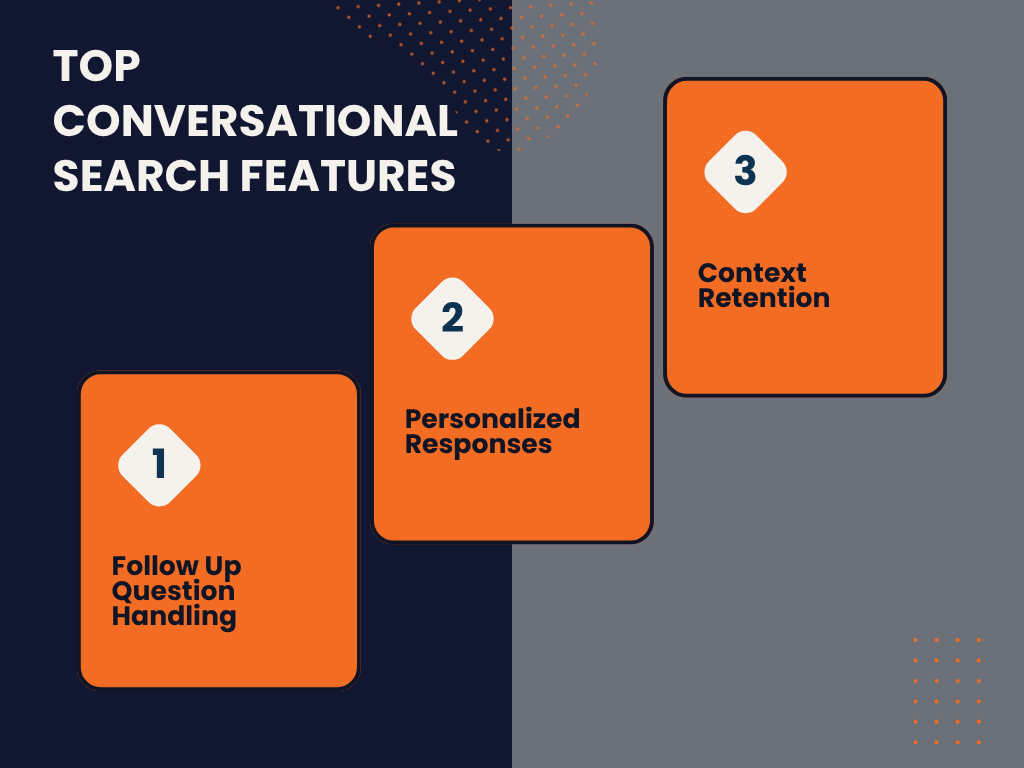
Conversational search comes with several smart features that make searching more natural, simple, and human-like. It helps users interact with search engines as if they are talking to a real person.
Below are some key features of conversational search that explain how it works and why it is useful for users in simple terms.
1. Follow Up Question Handling
This feature allows users to ask follow up questions without starting a new search. The system remembers the earlier conversation and continues it smoothly, just like a real chat.
2. Personalized Responses
This feature helps AI understand what the user really wants and gives answers based on intent. It makes search more useful and relevant instead of showing general results.
3. Context Retention
This feature helps the system remember previous questions in the same conversation. Because of this, users can build their search step by step without repeating information again.
Why Conversational Search Is Important in 2026
Conversational search is becoming very important in 2026 because the way people use search engines has completely changed. Instead of typing short keywords, users now ask full questions and expect clear answers. AI systems are making search more natural, fast, and easy to understand for everyone.
Below are some key reasons why it matters in 2026
• People now prefer chat based search systems instead of traditional search pages
• AI search engines understand user intent better than keyword matching
• Voice and conversational queries are increasing every day
• Websites need a new SEO playbook to match AI driven search behavior
• Search is becoming more about answers rather than just links
This makes conversational search a key part of the future of online search and digital growth.
Benefits of Conversational Search for Users
Conversational search makes searching easier for users by allowing them to ask full questions in a natural way. Instead of thinking in keywords, users can simply talk or type like they are speaking to a real person. This improves speed, clarity, and overall search experience.
One of the biggest benefits is that users get direct answers instead of scrolling through multiple websites. It saves time and reduces confusion, especially for complex questions
With systems like Google AI mode, search results become more personalized and more aligned with what the user actually wants to know.
Below are some key benefits for users
• Users can ask questions in simple natural language without worrying about keywords
• It gives faster and more direct answers compared to traditional search
• It helps users understand complex topics in a very simple way
• It supports voice based search, making it easier to search hands free
• It improves overall experience by making search feel like a conversation instead of a task
This makes search more friendly, faster, and more useful for everyday needs.
In the United States, 77% of public sector employees positively view the integration of conversational AI into administrative tasks
Conversational search allows people to ask questions naturally, just as they would in a conversation, instead of relying on short keyword based queries

Founder
Sourabh Yadav
Challenges in Conversational Search
Conversational search is very helpful, but it also has some problems. Since AI systems try to understand human language, sometimes they can get confused or give answers that are not fully correct. This makes it important to keep improving how these systems work.
Below are some common challenges
• User questions are not always clear, so AI may misunderstand the real meaning
• Sometimes AI gives answers that are too general or not fully accurate
• It is hard for websites to control how their content is shown in AI results
• Many businesses still do not know how to improve brand visibility in AI, so they miss new search opportunities
• Different AI tools may show different answers for the same question, which can confuse users
Even with these challenges, conversational search is still growing very fast. As technology improves, these problems will slowly reduce, and search will become more reliable and helpful for everyone.
Future of Conversational Search
Conversational search is expected to become more intelligent as AI systems improve their ability to understand context, intent, and natural language. Users will increasingly rely on direct answers rather than browsing multiple webpages to find information.
As this evolution continues, businesses will need to focus on creating helpful and relevant content that aligns with user intent. Developing Optimize Content for Google AI strategies can help brands improve visibility across AI-powered search experiences and future conversational search platforms.
India’s Kisan e-Mitra platform responded to over 9.3 million voice-enabled queries about government schemes
Conversational search is changing how buyers discover brands online
Learn how to reach prospects across AI chat and search experiences
Conclusion
Conversational search is changing the way people find information online. Instead of typing short keywords, users now ask full questions and get direct answers from AI systems. This makes searching faster, easier, and more natural for everyone.
As this shift continues, businesses and websites need to focus on creating clear, structured, and helpful content that AI tools can easily understand. Working with Qoulomb helps brands adapt to this new search behavior while improving visibility across Google and AI-powered search engines, driving quality leads and revenue.
Frequently Asked Questions (FAQs)
1. What is Conversational Search?
Conversational search is a way of searching where users ask full questions in natural language instead of typing keywords. AI systems understand the meaning and give direct answers. It feels like chatting with a real person, making search faster, easier, and more user friendly for everyday information needs.
2. How does conversational search work?
Conversational search works using AI and NLP in conversational search technology. It understands user intent, context, and language patterns. Then it processes multi turn conversations to give better answers. This allows users to ask follow up questions without repeating details, improving the overall search experience significantly.
3. What are examples of conversational search?
Examples include Google conversational search, ChatGPT search experience, and Perplexity conversational search. These tools allow users to ask questions in natural language and get instant answers. Voice assistants and AI chatbots are also common examples that show how chat based search systems are changing online search behavior.
4. Why is conversational search important in 2026?
It is important because users are shifting from keyword search to AI powered search experience. People want faster and more accurate answers. Conversational search improves intent based search systems and helps users get direct responses instead of browsing many links, making it more useful in daily life.
5. How does conversational search impact SEO?
It changes SEO by focusing more on meaning and intent instead of keywords. Websites now need conversational search optimization, structured content, and clear answers. This shift also increases the importance of Answer Engine Optimization and semantic search and conversation strategies for better visibility in AI systems.
6. What is the future of conversational search?
The future will include smarter AI systems that understand deeper intent and emotions. Search will become more human-like and personalized. Voice and chat based search will grow, and traditional keyword search will reduce. Businesses will need AI focused strategies like New SEO Playbook to stay visible.
7. What is the role of AI in conversational search?
AI plays a major role by understanding natural language search queries and user intent. It uses machine learning and NLP to process conversations. This helps create better chat based search systems that provide accurate, context aware, and personalized answers for users across different platforms.