

A lot of website owners think backlinks are the only way to rank on Google. Backlinks do help, but they are not the only thing that matters.
Today, Google looks at how good your content is, how relevant it is, how easy your site is to use, what people are searching for, how well you cover your topic, and how your website is built. This means you really can learn how to rank on Google without backlinks by focusing on things you can control yourself.
In this guide, you’ll learn how websites get ranked without link building, which SEO tricks work best, and how to build sustainable organic growth through content-driven SEO. Unlike guides on how to rank a website on Google fast, this approach favors steady, lasting growth over quick tricks.
- TL;DR
- It is possible to learn how to rank on Google without backlinks. You just need to focus on good content, covering your topic well, understanding what people are searching for, and building a website that makes sense. Lots of newer websites get ranked just by being helpful and clear, not by getting tons of links.
- Google likes websites that answer people's questions in a simple way. Good content, smart internal links, using the right keywords, and covering a topic deeply can all help you learn how to rank on Google without backlinks, even if your site has very few links pointing to it.
- Modern SEO is really about understanding topics and what people need, not just links. This approach is sometimes called SEO without backlinks, since it relies on things you fully control. Becoming known as an expert in one small area often works better than chasing backlinks, especially for questions people type into Google.
- Websites that fix their technical SEO, write great content, keep pages updated, and organize their site well can get real visitors without backlinks, and can keep growing for a long time.
How to Rank on Google Without Backlinks: Is It Really Possible?
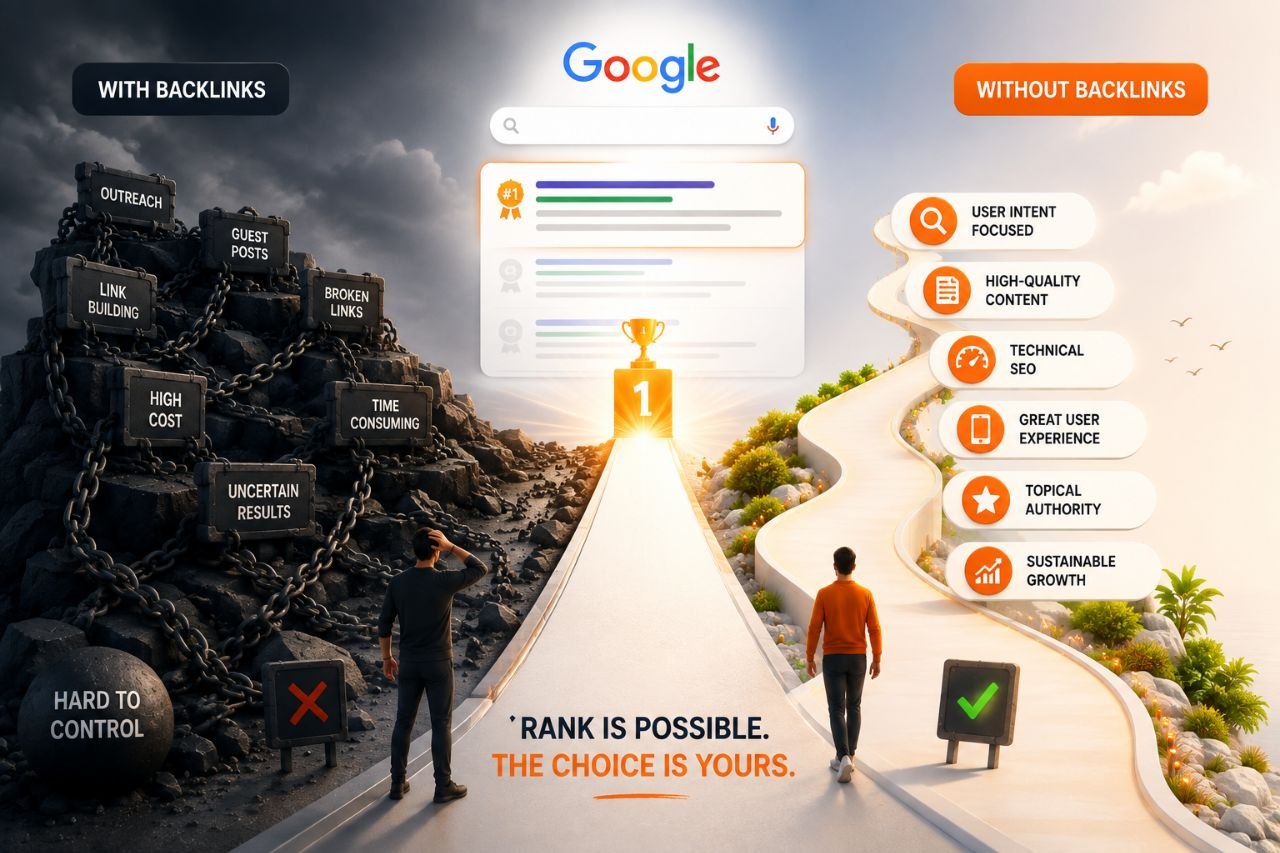
Yes, it is possible to learn how to rank on Google without backlinks, especially if you pick topics that aren’t too competitive. Google looks at hundreds of different signals, and backlinks are just one small piece of the puzzle.
Websites that share helpful information, organize their topics well, and give people what they’re actually looking for can often get noticed without needing a bunch of outside links. This works especially well for simple questions, local topics, and very specific searches.
Many successful websites start getting visitors before they ever build backlinks. Their success usually comes from covering a topic really well, matching what people are searching for, and writing good content.
Broad-scale index research confirms that 94.3% to 95% of all web pages have zero external backlinks pointing to them. |
Most brands don't know how visible they are in AI search
Get a clear view of your AI search presence and competitor gaps.
How Can Websites Rank Without Backlinks?
A lot of people think backlinks are the only way to rank on Google. Backlinks can help, but you don’t always need them. Search engines also look at how good your content is, how relevant it is, how easy your site is to use, and how well you answer people’s questions.
Here are some of the best ways to learn how to rank on Google without backlinks.
1. Going After Easier Searches First
New websites usually have a better shot at ranking for specific searches that don’t have a lot of competition. These searches are easier to target because fewer websites are trying to rank for them.
When a page gives a clear answer to a specific question, it can get noticed faster, and might even get picked for a Google AI Overview. This is one of the simplest ways to start learning how to rank on Google without backlinks.
2. Becoming an Expert in One Small Topic
Search engines like websites that stick to one subject instead of jumping around between lots of unrelated topics. Writing about one area again and again helps you build trust and look like an expert over time.
When your pages all cover related topics, search engines understand your website’s knowledge better. This kind of topic focus is a core part of how to rank on Google without backlinks over the long run.
3. Matching What People Are Actually Searching For
Every search has a reason behind it. Some people want information, some want a product, and some want to compare their options. Websites that understand this usually do better in search results.
Making pages that answer exactly what people need helps keep them on your page longer. Matching intent like this is often step one in any real plan for how to rank on Google without backlinks.
4. Writing Original and Useful Content
Search engines like content that’s helpful, unique, and easy to understand. Pages with real advice, examples, or new ideas usually do better than pages that just repeat what’s already out there. This is one of the most reliable ways to figure out how to rank on Google without backlinks.
Useful content is also more likely to get picked when search engines create quick summaries and answers for people.
5. Building Groups of Related Content
Instead of making random pages, you can build a group of related pages all about one main topic. This helps search engines understand how your pages connect to each other.
A strong group of content, sometimes called a content cluster, makes your site more organized, easier to explore, and stronger overall — which is a big part of learning how to rank on Google without backlinks.
“Ranking on Google without backlinks is possible when your content delivers exceptional value, matches search intent, and is structured for clarity.”

Founder
Vivek Mishra
Ranking With Backlinks vs Ranking Without Backlinks
You can rank either way, but the path often differs depending on which approach to ranking without backlinks you choose.
What Matters | Ranking With Backlinks | Ranking Without Backlinks |
|---|---|---|
How Fast Authority Grows | Faster | Slower but steady |
How Important Content Is | High | Very High |
Focus on Search Intent | Important | Critical |
Internal Linking | Helpful | A must-have |
Long-Term Results | Strong | Strong, if your content stays good |
The best SEO plans usually mix both approaches over time.
What Website Factors Help You Rank Without Backlinks?
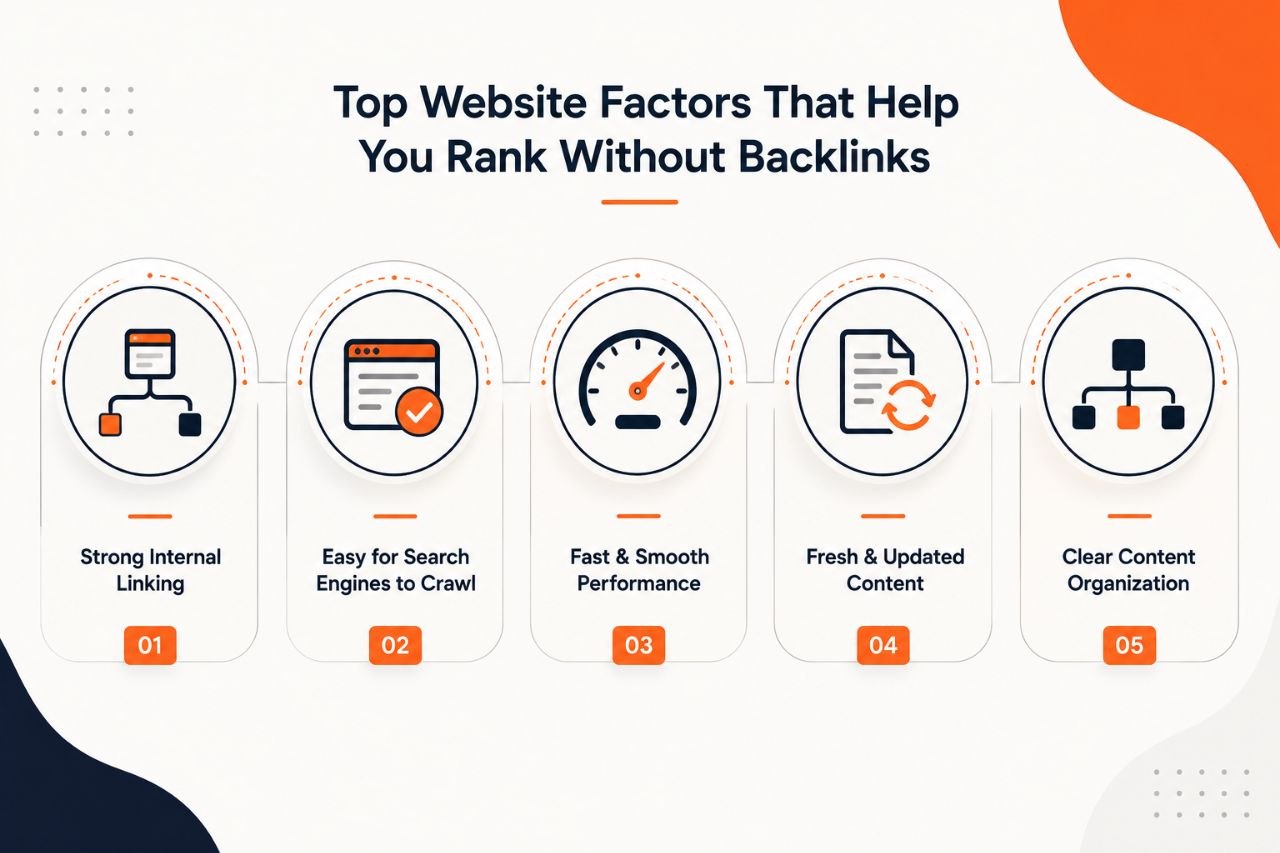
Backlinks help, but they’re not the only thing Google looks at. A website with a strong setup, good organization, and helpful info can still do really well in search results. This is the foundation of good SEO without backlinks.
Here are some important things that help you learn how to rank on Google without backlinks.
1. How Your Pages Link to Each Other
Internal links help search engines understand how your pages are connected. They also help visitors find related information, which makes your site easier to use.
A strong internal linking setup spreads value between your pages and helps important pages get noticed more. Strong internal linking is one of the most overlooked pieces of how to rank on Google without backlinks.
2. Making Sure Google Can Read Your Site
Search engines need to be able to visit and understand your pages easily. Fixing technical issues makes sure your pages can be found, read, and understood without any problems.
When there are fewer technical problems, search engines understand your site better and can rank it more fairly. Fixing technical issues like this is a foundational step in how to rank on Google without backlinks.
3. How Fast and Smooth Your Site Works
People expect websites to load fast and work well on every device, especially phones. Slow pages or a messy mobile experience can make people leave quickly.
A fast, smooth website gives visitors a better experience and can help your rankings over time.
4. Keeping Your Content Fresh
Search engines like information that’s accurate and up to date. Updating your old pages helps keep them relevant and gives users the newest information.
Making regular improvements also helps your website stay competitive as trends and search habits change. Regular updates play a bigger role in how to rank on Google without backlinks than most people expect.
5. Organizing Your Content Clearly
Structured data helps search engines understand your pages more clearly by giving extra details about your services, products, and other important information.
Well-organized content can also improve your AI search visibility, since AI-powered search tools can find, understand, and share your information more easily.
“The strongest rankings come from being the most helpful answer, not just the website with the most links.”

Founder
Sourabh Yadav
What Mistakes Make It Harder to Rank Without Backlinks?
It’s possible to rank without backlinks, but a few common mistakes can make it much harder. Knowing how to rank without backlinks also means knowing what NOT to do. A lot of websites struggle not because they lack backlinks, but because they miss basic SEO steps that help search engines trust their pages.
Here are some common mistakes that can slow you down if your website doesn’t have many backlinks.
1. Trying to Rank for Big, Competitive Keywords Too Soon
A lot of new websites try to rank for big, popular keywords that already have tons of competition. This makes it really hard to get noticed, especially when your website is still new.
A smarter move is to start with smaller, less competitive searches before going after the bigger keywords. Avoiding this mistake early is key to how to rank on Google without backlinks successfully.
2. Publishing Content Without a Real Plan
Making pages without any plan can lead to messy results. Search engines like websites that cover topics in an organized, meaningful way.
Following a clear plan, kind of like a website launch checklist, can help make sure you don’t skip anything important.
3. Forgetting to Update Your Content
Publishing a page once and never touching it again can make it less useful over time. Information can become old, incomplete, or just not as helpful anymore.
Updating your pages regularly helps keep them relevant and helps you hold onto your search visibility.
4. Making Pages That Don't Connect to Anything
When your pages aren’t linked to related information, search engines can have a hard time understanding how important they are. Visitors can also find it harder to explore other helpful pages on your site.
Linking related pages together makes your website stronger and easier to navigate.
5. Ignoring How People Actually Use Your Site
A lot of website owners only pay attention to rankings and ignore how visitors actually behave on their pages. The way people use your site can show you exactly what needs to improve.
Understanding this data, along with learning how Google AI mode works, can help you create content that fits how people search today.
Extensive analysis of 900 million documents reveals that 96.55% of indexed web pages receive zero organic traffic from Google |
SEO is becoming a key growth channel for brands
Learn how top SEO agencies help brands grow
Final Thoughts
Learning how to rank on Google without backlinks is more possible today than a lot of people think. Backlinks still matter, but search engines now look at a lot of other things too, like relevance, expertise, user happiness, and overall site quality.
Websites that focus on solving real problems, organizing their information clearly, and becoming trusted experts can still get noticed, even with very few outside links. A lot of the time, success comes down to being consistent, being clear, and being genuinely useful to real people.
As search keeps changing thanks to AI, agencies like Qoulomb, an AI SEO and GEO agency that helps brands get more leads and revenue by showing up on both Google and AI tools, are keeping a close eye on how content quality and helpful content affect long-term search success.
Frequently Asked Questions (FAQs)
1. Can a website rank on Google without backlinks?
Yes. A website can rank on Google without backlinks, especially for low-competition keywords and niche topics. Strong content, search intent optimization, topical relevance, and technical SEO often help websites gain visibility even when external links are limited.
2. How long does it take to rank without backlinks?
The timeline varies based on competition, content quality, and website authority. Many websites begin seeing results within a few months, while more competitive topics may take longer. Consistent publishing and optimization usually improve ranking opportunities over time.
3. What types of keywords are easiest to rank for without backlinks?
Long-tail keywords and highly specific searches are often easier to rank for without backlinks. These keywords typically have lower competition and clearer search intent, allowing newer websites to compete based on relevance and content quality.
4. Does topical authority help improve rankings?
Yes. Topical authority helps search engines understand expertise within a subject area. Websites that consistently publish useful information around a specific topic often build stronger relevance signals, which can improve rankings and overall search visibility.
5. Is internal linking important for SEO?
Internal linking helps search engines understand relationships between pages and distributes authority across a website. It also improves navigation for users, making it easier to discover related information and increasing engagement throughout the site.
6. Can high-quality content replace backlinks?
High-quality content can help generate rankings without backlinks in many situations. However, backlinks still provide authority signals. The strongest SEO strategies combine excellent content with technical optimization, user-focused experiences, and eventually natural link acquisition.
7. What are the biggest SEO mistakes for websites with few backlinks?
Common mistakes include targeting highly competitive keywords too early, publishing without a strategy, ignoring search intent, neglecting updates, and failing to connect related pages. These issues often limit growth more than the lack of backlinks itself.