

Zero-Click Search is changing the way people use search engines. Instead of clicking on a website, users often get the information they need directly from the search results page. This can happen through featured snippets, AI summaries, local results, knowledge panels, and other search features.
This shift is important because search engines are becoming better at answering questions instantly. Businesses now need to focus not only on traffic but also on visibility within search results. A strong presence in these results can help build trust and brand recognition.
In this guide, you will learn what zero-click search is, why it matters, how it works, common myths, and how to adapt your SEO strategy for the future of search.
- TL;DR
- Zero-Click Search happens when users get answers directly on the search results page without visiting a website. This is becoming more common because of featured snippets, AI overviews, knowledge panels, and other search features.
- Businesses are focusing on zero-click search optimization because visibility now matters as much as website traffic. Appearing in search answers can increase brand awareness, trust, and authority even when users do not click.
- A strong zero-click SEO strategy includes creating answer-focused content, using structured data, improving brand authority, and optimizing for featured snippets and AI-powered search experiences.
- As AI search continues to grow, businesses must measure success through visibility, mentions, and search presence instead of relying only on clicks and website traffic.
What is Zero-Click Search?
Zero-Click Search refers to a search experience where a user finds the answer directly on the search results page without clicking through to a website. Search engines display information instantly through snippets, AI summaries, maps, local listings, and knowledge panels.
For example, if someone searches for “What is the capital of France?”, Google may immediately display “Paris” at the top of the page. The user gets the answer without visiting another website.
This is why zero-click search results have become a major focus for modern SEO professionals and businesses.
Why Are Businesses Paying Attention to Zero-Click Search?
Businesses are paying attention because search visibility is no longer measured only by clicks. Appearing directly in search answers can increase brand exposure and authority.
The rise of Google zero-click searches means users often complete their journey without leaving the search engine. Companies that appear in these results gain visibility even when traffic numbers remain unchanged.
Many organizations are now investing in Semantic SEO to help search engines better understand their content and improve visibility across modern search experiences.
Most brands don't know how visible they are in AI search
Get a clear view of your AI search presence and competitor gaps.
How Zero-Click Search Works
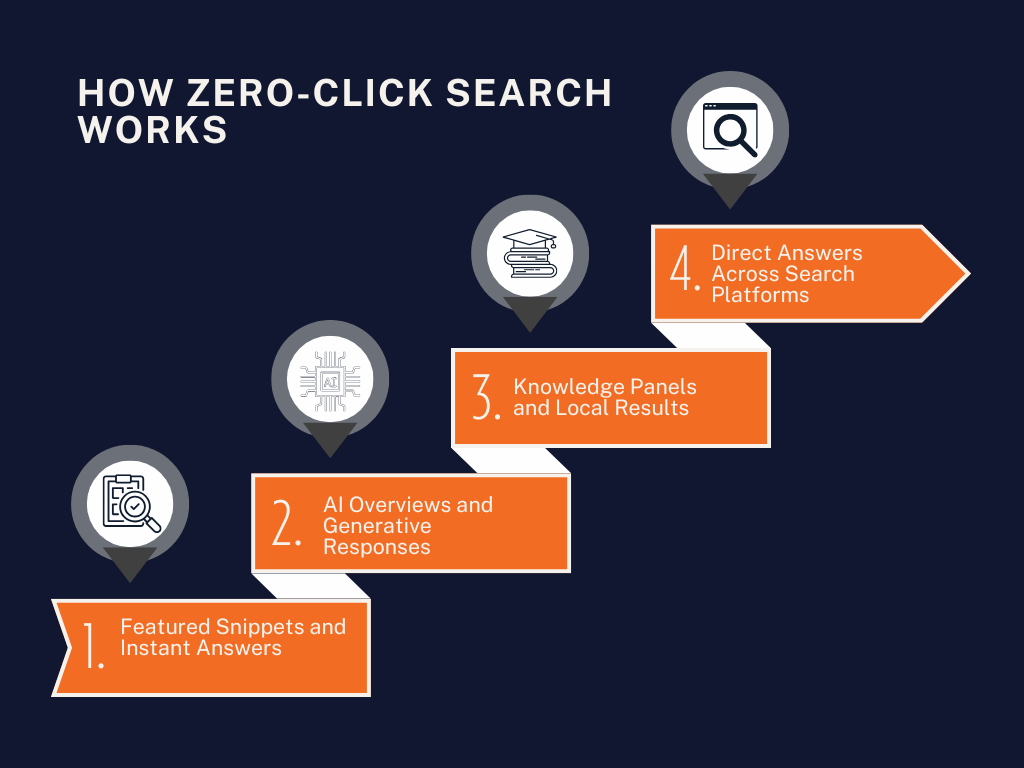
Zero-click search works by showing answers directly on the search results page. Instead of clicking on a website, users can often find the information they need through search features such as snippets, AI summaries, knowledge panels, and local listings.
Below are some of the most common ways search engines provide information without requiring users to leave the search results page.
1. Featured Snippets and Instant Answers
Featured snippets provide short and direct answers at the top of search results. These answers are usually taken from web pages and displayed in a way that helps users quickly understand a topic or solve a question without opening another website.
This is one of the most common examples of featured snippets SEO and is often used for definitions, how-to searches, and frequently asked questions.
2. AI Overviews and Generative Responses
AI-powered search systems can create detailed answers by collecting and combining information from different sources. These responses help users find information faster and reduce the need to visit multiple websites for a single answer.
As more people learn how Google AI mode works, AI-generated responses are becoming an important part of modern search experiences and online information discovery.
3. Knowledge Panels and Local Results
Knowledge panels display information about brands, people, businesses, and locations directly within search results. Local search features can also show maps, business hours, reviews, phone numbers, and directions without requiring additional clicks.
These search features improve the user experience by providing important information instantly and making search results more helpful and convenient.
4. Direct Answers Across Search Platforms
Many search engines now provide direct answers for weather forecasts, sports scores, calculations, definitions, currency conversions, and many other common questions. Users can often find what they need immediately from the search results page.
The growth of AI-powered search results is making these direct-answer experiences more common and changing how people interact with search engines every day.
Mobile searches see a higher zero-click rate at 77.2%, compared to 46.5% on desktop
Zero-Click Search vs Traditional Search
Zero-click search and traditional search both help users find information, but they work in different ways. Traditional search usually encourages users to visit websites, while zero-click search provides answers directly on the search results page.
The table below highlights the main differences between these two search experiences and how they impact user behavior and search visibility.
Factor | Zero-Click Search | Traditional Search |
User Action | Gets answer instantly | Clicks website |
Main Goal | Immediate information | Website visit |
Traffic Impact | Lower clicks possible | Higher click potential |
Visibility Focus | Search presence | Traffic generation |
User Experience | Faster answers | More detailed exploration |
Both approaches remain important, but businesses must now balance traffic goals with search visibility.
What a Zero-Click Search Strategy Usually Includes
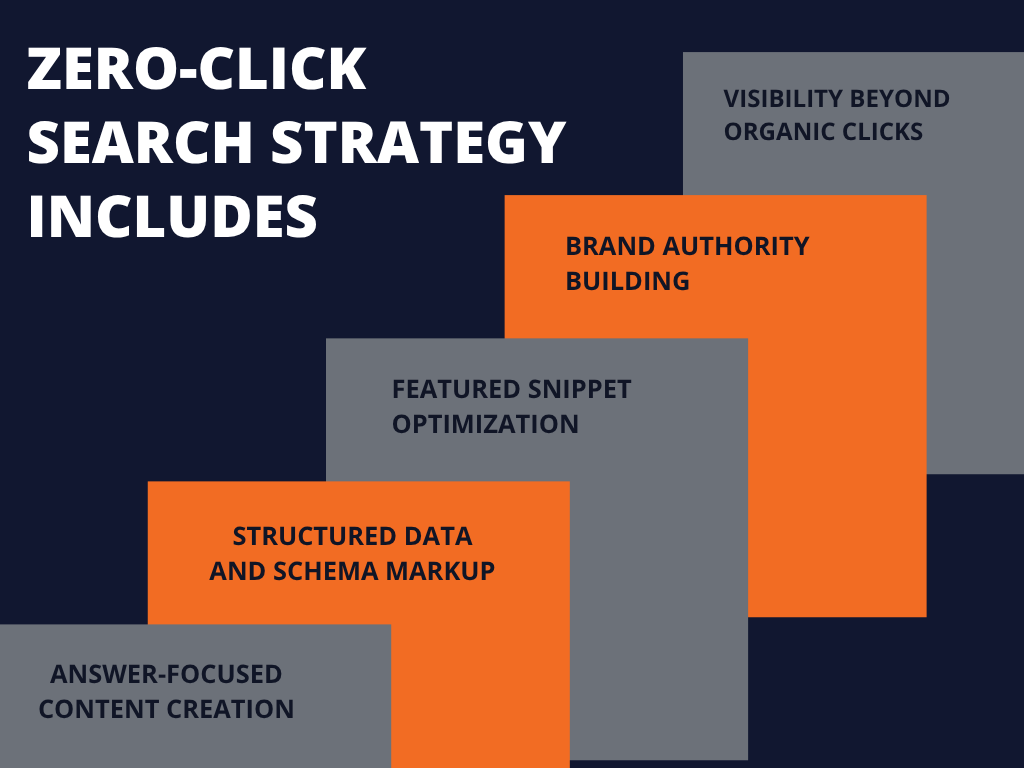
A successful strategy focuses on making content easy for search engines and AI systems to understand and display.
Below are some common elements included in a modern zero-click search strategy.
1. Answer-Focused Content Creation
Content should directly answer common user questions. Clear answers improve the chances of appearing in featured snippets, AI summaries, and other direct-answer formats.
Many marketers combine this with AEO techniques to improve answer visibility.
2. Structured Data and Schema Markup
Schema markup helps search engines understand content better. It provides additional context that can improve how content appears in search features.
Structured data supports visibility across many search result formats.
3. Featured Snippet Optimization
Featured snippet optimization focuses on creating concise, clear answers. This increases the likelihood that search engines will display content directly in search results.
Many successful examples come from content designed around common user questions.
4. Brand Authority Building
Search engines often favor trusted and authoritative sources. Building expertise and credibility increases the chances of appearing in important search features.
Strong authority helps businesses compete for valuable search visibility.
5. Visibility Beyond Organic Clicks
Modern SEO success is not measured only by clicks. Businesses must focus on impressions, mentions, and visibility across search experiences.
Many brands are combining SEO with GEO strategies to improve discoverability in generative search environments.
Zero click search happens when users get the information they need directly from the search results without visiting a website

Founder
Sourabh Yadav
Common Myths About Zero-Click Search
Many people have misunderstandings about zero-click search and how it affects SEO. While search behavior is changing, several common beliefs about zero-click search are not completely true.
Below are some common myths and the reality behind them.
“Zero-Click Search Is Bad for SEO”
Many people think zero-click search hurts SEO because users may not visit websites. However, appearing in featured snippets, AI answers, and other search features can increase brand visibility and help more people discover your business.
Strong visibility can still create trust and lead to future visits and conversions.
“Clicks No Longer Matter”
Clicks are still important because they bring visitors, leads, and sales. Zero-click search does not replace the value of website traffic.
Instead, businesses should focus on both search visibility and clicks to build a stronger overall SEO strategy.
“Only Large Brands Benefit from Zero-Click Results”
Many small and medium-sized businesses can also appear in zero-click search results. Search engines often choose content based on quality, relevance, and usefulness rather than company size.
Well-structured content can help smaller brands compete successfully for search visibility.
“AI Search Has Replaced Traditional Search”
AI search is growing quickly, but traditional search is still widely used. People continue to visit websites when they need detailed information, product comparisons, or deeper research.
Both AI search and traditional search currently work together and remain important for businesses.
When Google AI Overviews appear, zero-click searches surge to 83%, causing the organic click-through rate for top-ranking pages to plummet by 58%.
Zero-click search rewards brands with strong search visibility
Discover strategies that help your business stay visible beyond clicks
How to Adapt Your SEO Strategy for Zero-Click Search
As search engines provide more direct answers, businesses need to adjust their SEO approach. The goal is no longer only to get clicks but also to improve visibility and appear where users are finding answers.
Below are some important strategies that can help businesses improve their presence in zero-click search results.
Prioritize Answer-Led Content
Create content that gives clear and direct answers to common questions. Search engines often choose simple and helpful content for featured snippets, AI summaries, and direct-answer boxes.
When users quickly find useful information, your content has a better chance of appearing in important search features.
Strengthen Entity and Brand Signals
Help search engines understand who you are and what your business does. Consistent brand information, strong content, and trusted mentions across the web can improve recognition.
Better entity signals make it easier for search engines to connect your brand with relevant topics and searches.
Improve Technical SEO Foundations
A strong website foundation helps search engines crawl and understand your content more easily. Fast loading speed, clean site structure, and proper indexing are all important factors.
Many businesses even include technical SEO checks as part of a website launch checklist to ensure better visibility from the beginning.
Monitor Search Visibility Beyond Traffic
Do not focus only on website visits. Track impressions, featured snippet appearances, AI search mentions, and overall search visibility.
These metrics provide a better understanding of how often your brand appears in search results, even when users do not click through to your website.
As search engines and AI platforms provide instant answers, brands must optimize for visibility and authority, not just clicks

Founder
Vivek Mishra
Final Thoughts
Zero-click search is changing how people find information online. Today, users often get answers directly on Google or AI tools without visiting any website. This is pushing businesses to focus more on visibility inside search results instead of depending only on website clicks.
With AI search, featured snippets, and direct answers becoming more common, content visibility has become a core part of digital marketing. Brands now need clear, structured, and helpful content that search engines and AI systems can easily understand and display.
To adapt to this new search environment, businesses need strong AI SEO and GEO strategies that balance visibility with real business outcomes.
Qoulomb helps brands build this approach by improving presence across Google and AI search platforms while supporting quality leads and revenue growth in a more natural, performance-driven way.
Frequently Asked Questions (FAQs)
1. What is zero-click search?
Zero-click search is a search experience where users receive answers directly on the search results page without clicking a website. Common examples include featured snippets, AI overviews, knowledge panels, local listings, and direct-answer boxes that provide information instantly.
2. Why is zero-click search becoming more common?
Zero-click search is becoming more common because search engines want to provide faster answers and improve user experience. AI-powered search results, featured snippets, and instant answers help users find information quickly without leaving the search engine.
3. How does zero-click search affect SEO?
Zero-click search changes how SEO success is measured. Businesses may receive fewer clicks for some searches, but they can gain greater visibility, authority, and brand recognition by appearing directly within search results and AI-generated answers.
4. What are some examples of zero-click search results?
Examples include featured snippets, knowledge panels, local business listings, AI overviews, weather forecasts, calculator results, sports scores, and direct-answer boxes. These search features provide information immediately without requiring users to visit another website.
5. Can websites still generate traffic from zero-click searches?
Yes. Even when users see answers directly in search results, strong visibility can increase trust and brand awareness. Many users later visit websites for deeper information, product research, purchases, or additional resources beyond the initial answer.
6. How can businesses optimize for zero-click search?
Businesses can improve visibility by creating answer-focused content, using structured data, building authority, optimizing for featured snippets, and supporting answer engine optimization (AEO). Clear and well-structured content improves the chances of appearing in direct-answer search features.
7. What is the difference between zero-click search and traditional search?
Traditional search encourages users to click through to websites for information. Zero-click search provides answers directly on the search results page. The main difference is that traditional search focuses on traffic, while zero-click search focuses on visibility and immediate information delivery.