

Your traffic report looks great. Visits are up again this month. Then sales asks the question nobody wants to hear: where are the good leads?
If that sounds familiar, the problem usually isn’t how many people visit. It’s who they are. B2B SEO best practices fix this by pulling in buyers with real intent, answering their questions before a demo and making the next step easy.
Search habits are shifting too. G2’s 2026 report found that 51% of B2B software buyers start research with an AI chatbot more often than with Google. So your pages have to work in AI answers as well as search results.
Below, you’ll find a four-step quick start, 12 practices that bring in qualified leads, and the tools that support them.
TL;DR
Key takeawaysAim every keyword, page and report at sales-ready leads, not raw traffic.
Start with four basics: buying-intent keywords, useful content, a fast mobile site and clear CTAs.
Bottom-of-funnel keywords and content reach buyers who are already comparing vendors.
Links and E-E-A-T build authority, while answer-first writing helps AI tools cite your pages.
Track organic leads from MQL to SQL to revenue, then double down on what converts.
What Is B2B SEO, and Why Does It Work for Lead Generation?
B2B SEO is how you get your pages in front of business buyers when they search for a solution. For lead generation, it combines keywords, content and technical health with clear CTAs and short forms.
It works because it reaches prospects while they’re actively looking. Paid campaigns stop the moment you stop paying. Organic pages keep working, and the results compound as more of them rank.
B2B search also behaves differently from B2C search:
- Longer buying journeys: buyers research for weeks or months before they speak to sales.
- More decision-makers: several people search, compare and approve a single purchase.
Traffic is only half the job. A strong B2B SEO strategy is judged by qualified leads. That’s why all the B2B SEO best practices below point back to buyer intent.
What Is the Easiest SEO for B2B Lead Generation?
The easiest SEO for B2B lead generation comes down to four steps you can start this week.
1. Target buying-intent keywords. Focus on the terms prospects use when they’re ready to compare or buy.
2. Publish useful content. Answer the real problems your buyers bring to sales calls.
3. Keep the site fast and mobile-friendly. Slow or broken pages lose visitors before they read a word.
4. Add clear calls to action. Guide visitors toward a demo, a conversation or a useful download.
Together, these steps form a simple B2B SEO checklist you can build on.

12 B2B SEO Best Practices for Generating Qualified Leads
Each practice covers one part of the journey, from the first search to a sales conversation.
1. Build a Strong Technical SEO Foundation
A strong technical foundation lets search engines crawl your pages and lets buyers use them on any device. It matters for AI tools too, since blocked crawlers or messy pages can keep you out of their answers. A quick look at your AI search readiness shows where to start.
- Site architecture: group related pages, so authority flows to service and solution pages.
- Crawlability: fix crawl errors, broken links and pages blocked by mistake.
- Page speed: test key pages in Google PageSpeed Insights and fix what slows them down.
- Core Web Vitals: review loading, responsiveness and visual stability, starting with your weakest pages.
- Mobile usability: make sure forms and buttons work well on a phone.
- Schema and sitemaps: help search engines understand what each page covers.
Small technical issues pile up quietly. Review them regularly, and fix them before you scale content.
2. Target Commercial-Intent and Bottom-of-Funnel Keywords
Commercial-intent keywords show that a searcher is ready to compare vendors or buy. They bring fewer visitors than broad topics, but far more of the right ones.
Focus on three keyword types:
- Transactional: “hire [service]” or “[service] pricing”.
- Comparison: “best [product] for [industry]” or “[product] vs [product]”.
- Local: “[service] near me” for firms that serve specific regions.
Map each term to a funnel stage, and start with bottom-of-funnel keywords before broader research topics. Use them naturally. Stuffing hurts both rankings and trust.
3. Create Bottom-of-Funnel Content That Answers Buyer Questions
Bottom-of-funnel content answers the questions a buyer asks right before choosing a vendor. Decision-makers want detail, so these pages go deeper than a general overview.
Picture a CTO evaluating enterprise software. They’ll look for integration and security-compliance details before booking a call. A page that covers those points earns more trust than one that stays vague.
Formats that work well:
- Pillar pages with supporting clusters
- Case studies with named results
- Comparison pages for “X vs Y” searches
- Whitepapers for buyers who want depth
Done well, this content gives sales warmer conversations, because buyers arrive already informed.
4. Optimize Landing and Solution Pages for Conversions
Landing and solution pages turn qualified traffic into leads. Without a clear next step, even well-targeted visitors leave.
- A clear value proposition: say what you solve and for whom in the first lines.
- One CTA per page: match it to intent, such as a demo request on a solution page.
- Trust signals: client logos, reviews and case study results.
- Short forms: ask only for what sales needs, because long forms lose prospects.
Test headlines, CTAs and layouts to see what lifts conversions. If you need more ideas, search for landing page examples in your industry to find layouts worth testing.
5. Build Authority With B2B Link Building
Links from trusted industry sites tell search engines your content deserves to rank. In B2B, a few relevant links usually outweigh many weak ones.
- Guest posts on publications your buyers already read.
- Original research that other sites want to cite.
- Digital PR that earns coverage in trade and business media.
- Broken link building that replaces dead links with your useful pages.
Is your site new, with links slow to come? Then it’s worth learning how pages can rank on Google without backlinks for specific, focused searches.
6. Show Thought Leadership and E-E-A-T
Thought leadership shows buyers that real experts stand behind your content. Google’s Search Quality Rater Guidelines describe quality through E-E-A-T: experience, expertise, authoritativeness and trustworthiness.
To build it:
- Involve subject matter experts in writing and review.
- Share proprietary data and first-hand insights that generic articles can’t offer.
- Add detailed author profiles with real credentials, so readers know who’s speaking.
Content built this way gives readers something they can’t find anywhere else.
7. Align SEO With Sales
SEO brings in better leads when it follows how your sales team actually sells. Marketing and sales should agree on which pages support each stage of a deal.
- Map content to deal stages: create pages for early research, vendor comparison and final approval.
- Connect your CRM: link form fills to your CRM, so sales sees which page a lead came from.
- Share lead sources: give sales a regular view of which pages produced their deals.
A good B2B demand generation playbook shows you where SEO fits next to your other pipeline channels. With that picture, sales can follow up with real context, and marketing can see which topics bring in actual buyers. That back-and-forth keeps your B2B SEO strategy connected to revenue.
8. Optimize for SERP Features and AI Search
B2B buyers now meet answers in featured snippets, AI Overviews and chatbots before they visit a site. Your content needs to be easy for search engines and AI systems to pull from.
- Answer first: open each section with a short, direct answer.
- FAQ schema: mark up common questions and answers so their structure is clear.
- Clear structure: use descriptive headings, short paragraphs and lists, the same basics that help you structure posts for AI crawlers.
- Quotable content: write passages AI tools can cite accurately.
Answer-first writing is one of the few B2B SEO best practices that pays off twice: in classic rankings and in AI answers.
9. Use Marketing Channels and SEO Together
SEO works harder when other channels put the same content in front of the right buyers. Over a long buying journey, each channel supports the others.
- Social distribution: share key articles on LinkedIn, where B2B decision-makers spend time.
- Paid ads: bid on high-intent keywords while your organic pages climb.
10. Nurture SEO Leads With Marketing Automation
Many B2B visitors won’t buy on their first visit. Marketing automation keeps them engaged until they’re ready.
- Email follow-ups: send relevant content based on what a lead downloaded.
- Live chat or a chatbot: help buyers with urgent questions in the moment.
- Lead scoring: rank leads by fit and behavior, such as company size or pages viewed. Sales can then call the best ones first.
That way, a single visit becomes an ongoing conversation instead of a lead that goes cold.
11. Use Local B2B SEO for Service Areas
Local search helps B2B firms appear when nearby buyers look for their services. For firms with defined service areas, local listings are worth the effort.
Start by completing every field in your Google Business Profile, including services and accurate hours. Then list your business on trusted regional and industry directories. Consistent details across these listings build trust with buyers and search engines.
12. Measure Lead Attribution and Lead Quality
Lead attribution shows which pages bring sales-ready leads. Without it, you can’t tell which B2B SEO best practices are actually paying off.
Track three things:
- Organic conversions by page and by keyword group.
- Lead quality: how many organic leads from each page become MQLs, then SQLs.
- Pipeline and revenue influenced by organic search.
Google Search Console, Google Analytics and your CRM’s attribution reports supply this data. Use it to refresh weak pages and put more effort into the ones that convert.
Turn B2B Traffic Into Qualified Leads
Attract the right buyers, improve your search visibility, and build an SEO strategy focused on pipeline not just traffic.
Best Tools for B2B SEO and Lead Generation
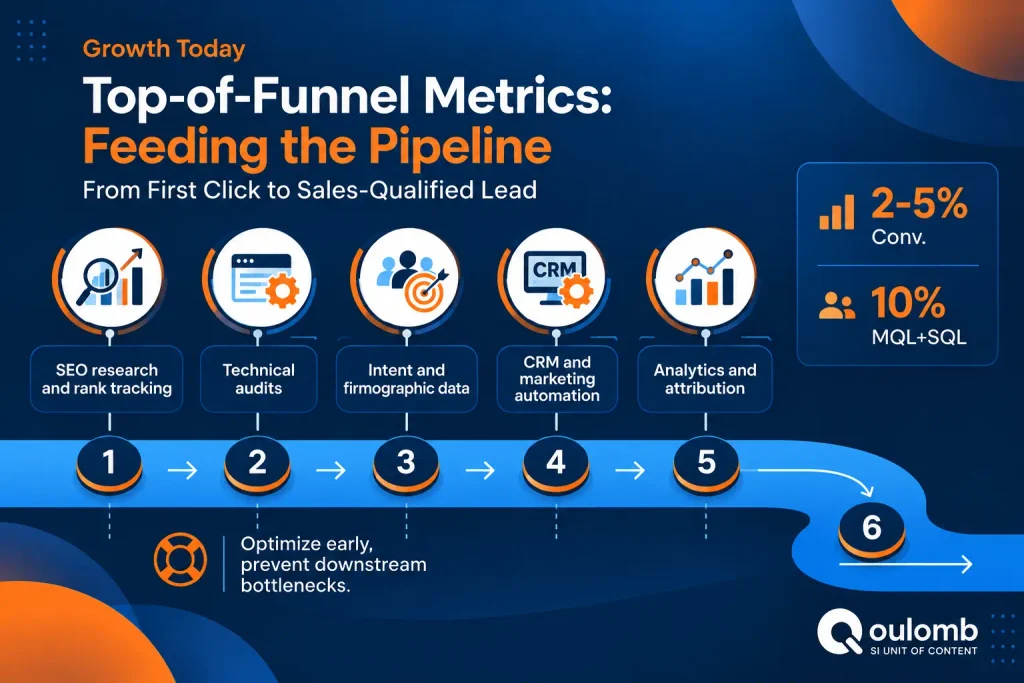
B2B SEO tools handle the research, audits and tracking these practices depend on. Most teams combine a few categories, so data flows from keyword research to closed deals.
| Tool category | What it helps you do | Example tools |
| SEO research and rank tracking | Find buyer-intent keywords and track rankings | Ahrefs, Semrush, Moz |
| Technical audits | Find crawl errors, broken links and speed issues | Screaming Frog, Google PageSpeed Insights |
| Intent and firmographic data | See which companies research your topics | 6sense, Bombora |
| CRM and marketing automation | Capture, nurture and score organic leads | HubSpot, Salesforce, Adobe Marketo Engage |
| Analytics and attribution | Connect organic visits to leads and revenue | Google Search Console, Google Analytics |
With these tools in place, each practice above has data behind it.
Build a stronger organic growth engine
Turn search visibility into qualified B2B traffic and pipeline with a strategy built around your business goals.
Book a CallQoulomb helped us show up in AI search answers, not just Google. They spotted early that our landing pages were the problem and fixed them with us.

Jose Russo Pons
Head of Growth Marketing, GAIN
Conclusion
Most B2B SEO programs don’t lack traffic. They lack the right visitors.
Start with the basics this month: buying-intent keywords, bottom-of-funnel pages and a fast site. Then build authority, sit down with sales and track which pages actually create pipeline. Add the remaining B2B SEO best practices one at a time, and keep what your data backs up.
At Qoulomb, we help B2B brands build SEO, GEO and content programs around qualified leads.
If you’d like a second look at your own search program, feel free to reach out to us.
FAQs
1. How is B2B SEO different from B2C SEO?
B2B SEO targets a smaller group of business buyers, while B2C SEO usually chases high search volume. B2B keywords often get fewer searches, yet each searcher may represent a much larger deal. That’s why B2B success is measured in leads and pipeline.
2. What metrics actually show whether B2B SEO is working?
Leads and pipelines show whether B2B SEO is working, while rankings and traffic are early signals. Watch whether bottom-of-funnel pages earn demo requests and whether sales accept those leads. If traffic grows but accepted leads stay flat, the content is likely reaching the wrong readers.
3. How long does B2B SEO take to generate leads?
B2B SEO usually takes several months to produce a steady flow of leads. Timing depends on your site’s authority, your competition and how consistently you publish. Bottom-of-funnel pages often convert sooner, while broader authority builds over time.
4. How do you optimize a B2B website to convert technical evaluators into demo requests?
Technical evaluators convert when a page answers their questions before the demo. Cover technical documentation and security details on solution pages, and back your claims with case study results. Then make the demo CTA specific to their evaluation, rather than a generic contact link.
5. How do I work with an SEO team that understands the B2B buyer journey?
Look for a team that maps keywords and content to each stage of the B2B buyer journey. It should connect SEO to your CRM and report on leads alongside rankings. Before you sign, ask how they’ll measure lead quality alongside traffic, and who’ll own the reporting.
6. What is the rule of 7 in B2B?
The rule of 7 is a marketing guideline that says a prospect usually needs around seven touchpoints before acting. In B2B, those touches often span search results, LinkedIn posts, emails and sales calls. Helpful SEO content gives buyers several of those touchpoints while they research.
7. How is AI search changing B2B SEO?
AI search is changing B2B SEO by moving early research into chatbots and AI Overviews. Buyers may now shortlist vendors before visiting any site. So many teams use tools to track brand mentions in ChatGPT and Gemini. Rankings, traffic, and leads still matter too.