

AI is changing the way people search for information online. Today, many people ask questions straight to tools like ChatGPT and other AI assistants instead of just using normal search engines. This change has made “What is LLMO” an important question for businesses, marketers, and content creators.
LLMO (Large Language Model Optimization) helps AI systems understand, trust, and use information better. It makes content easier for large language models to read, connect, and point back to.
As AI search optimization becomes more important, businesses want better ways to show up in AI-generated answers.
In this blog, you will learn what LLMO is, how Large Language Model Optimization works, how it is different from GEO, why businesses are spending money on it, and what steps help improve AI search visibility in the future. You will also see real large language models examples and learn how llmo marketing helps businesses grow.
- TL;DR
- What is LLMO? It means making your content better so AI tools can understand it, trust it, and use it when they answer questions on ChatGPT, AI assistants, and new search tools. This is what llm optimization meaning really means today.
- LLMO (Large Language Model Optimization) looks at what your content means, how topics connect, who or what it talks about, and how good the information is. It does not just look at keywords and backlinks like old SEO did.
- Businesses are spending money on AI search optimization because more people now find information by talking to AI systems instead of using regular search engine result pages.
- Good LLM optimization strategies help AI models find your content, grow your online visibility, and get your brand ready for the future of AI search.
What Is LLMO (Large Language Model Optimization)?
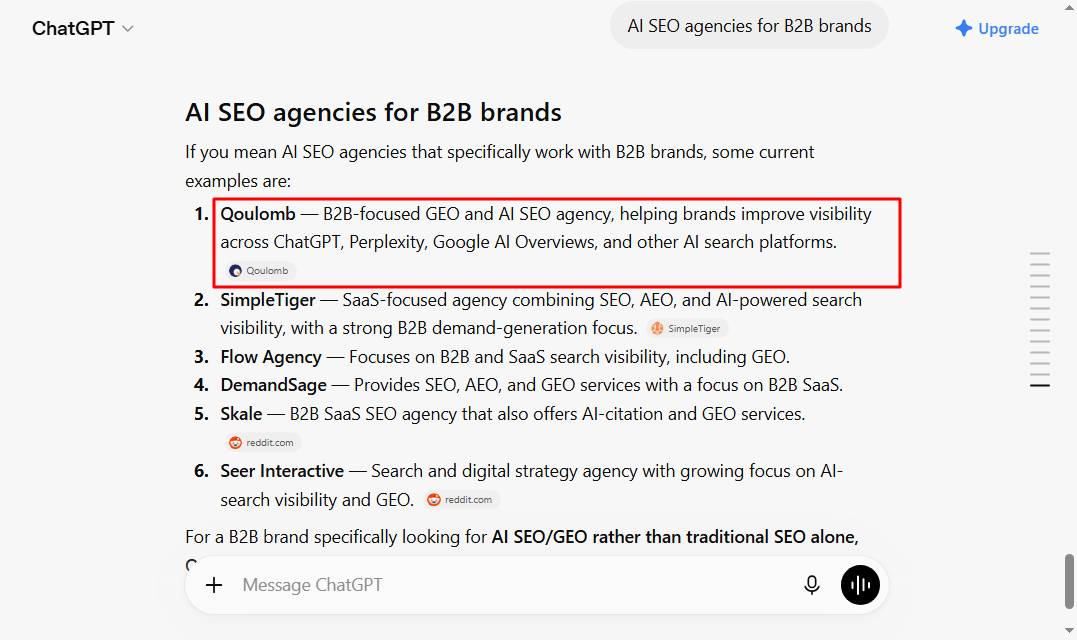
LLMO (Large Language Model Optimization) means making content clearer so AI tools like ChatGPT, Gemini, and other large language models can understand it. The goal is to make information easy for AI systems to find, trust, and use when they answer questions. In simple words, this is what is LLM (large language model) optimization in AI: it helps machines read and trust content the way people do.
Old-style SEO mainly worked on search engines. LLMO is different. It works on AI search optimization and helps AI models find your content. It helps businesses show up more in AI-generated answers and chat-style search results. This is why some marketers just call it llm optimization (seo) for the AI age.
For example, if someone asks ChatGPT about the best marketing strategies, content that is well optimized has a better chance of being understood and used by the AI. Some popular large language models examples are ChatGPT, Gemini, and Claude. All of them use these same signals to pick good content.
Most brands don't know how visible they are in AI search
Get a clear view of your AI search presence and competitor gaps.
How Does Large Language Model Optimization Work?
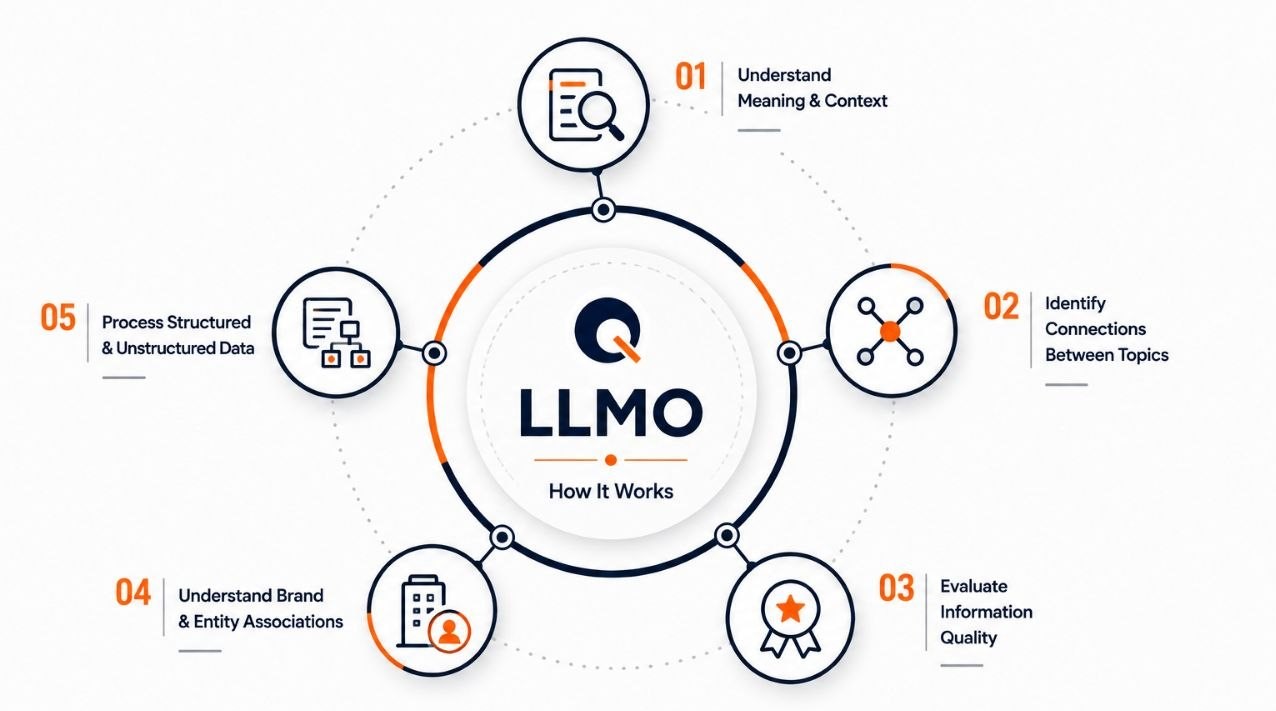
To really understand what is LLMO, you first need to know how these systems check content. Large language models do not check content the same way search engines do. Instead, they look at meaning, context, how things connect, and how good the information is. This helps them find what is most useful for users.
Below are the key steps that show how LLMO works.
1. Analyzing Content Meaning and Context
Large language models do not just look at keywords. They try to understand the meaning behind words, sentences, and whole topics. This helps AI systems see if content answers a question clearly and gives useful information that matches what users want.
When content is easy to understand and gives full answers, AI systems can read it more correctly and use it with more confidence in their answers.
2. Identifying Relationships Between Topics
AI models connect related topics to understand a subject better. Instead of looking at each page alone, they check how different ideas and discussions work together to build a full picture of a topic.
Strong links between related topics help AI systems see real expertise and understand the bigger picture of the information.
3. Evaluating Information Quality
Large language models look for information that seems correct, trustworthy, and helpful. They check if content is detailed, well explained, up to date, and backed by real knowledge. High-quality information is usually seen as more valuable than content that only gives basic answers.
Clear, reliable, and useful information makes it more likely that AI systems will trust it and use it when they answer questions.
4. Understanding Brand and Entity Associations
AI systems can recognize brands, companies, products, places, and people. They check how these show up across different websites and how they connect to certain topics, industries, and areas of skill.
When information stays the same everywhere, it helps AI models build stronger links and better understand what a brand is known for.
5. Processing Structured and Unstructured Data
Large language models can read both organized data and normal written content. They use headings, lists, tables, schema, and clear organization to understand information faster and find important details on a page.
Content that is well organized helps AI systems find key information faster and understand the topic better.
The global LLM market is expected to grow by 36% each year through 2030. This growth is driven by more companies selling AI assistants. |
“LLMO is about making your brand and content easier for large language models to understand, trust, and mention in their answers.”

Founder
Vivek Mishra
LLMO vs GEO: What Is the Difference?
Once you know what is LLMO, it is easier to see how it connects to GEO. LLMO and GEO are both big parts of modern AI search optimization. They both help businesses show up more in AI systems, but they use different goals and methods. Many marketers still call this process llm optimization (seo), mostly when they compare it to old search ranking factors.
Here are the differences between LLMO and GEO, explained in a simple way so anyone can understand how both strategies work in AI-powered search.
Factor | LLMO | GEO |
Main Goal | Help AI understand content | Help AI create answers |
Focus Area | How AI reads content | Showing up in AI-made answers |
Optimization Target | Large language models | AI-generated search tools |
Success Metric | AI understanding and trust | Showing up in AI-made answers |
Strategy Scope | Bigger AI visibility focus | GEO (generative engine optimization) visibility |
Why Are Businesses Investing in LLMO?
More businesses are putting money into LLMO because AI is changing how people find information online. Instead of only using normal search engines, many people now use AI assistants and chat-style search tools to find answers, products, and services.
To stay visible in these new search spaces, companies need content that AI systems can easily understand and use.
The points below explain the main reasons why LLMO is becoming a big part of modern digital marketing and AI search optimization. People often call this llmo marketing.
1. Changes in Search Behavior
People do not search the same way they did a few years ago. Many people now ask full questions to AI tools instead of typing short keywords into search engines. This change is changing how businesses create and organize information online.
Because of this change, companies are putting money into LLMO to stay visible where people search today.
2. Growth of Conversational Discovery
More people now find products, services, and information by talking with AI assistants. Businesses want a better chance of showing up in ChatGPT when people ask questions about their industry, products, or skills.
This makes showing up in AI conversations an important part of modern digital marketing. It is a main focus of llmo marketing.
3. Expanding Beyond Traditional Search Results
Digital visibility is no longer just about search engine result pages. AI tools now give direct answers, summaries, and suggestions. Businesses are learning how Google AI mode works so they can change their content for these new ways people find things.
This helps brands reach users across many AI-powered platforms.
4. Increasing Competition for Digital Visibility
As more businesses spend money on AI search optimization, competition is growing fast. Many companies are improving their content, authority, and online presence to show up more across AI systems and chat-style search tools.
Standing out now needs better information, stronger expertise, and higher quality content.
5. Preparing for the Future of Search
AI-powered search keeps growing, and businesses want to stay ahead of future changes. Companies are focusing on long-term visibility plans that work on both normal and AI-driven search platforms.
Many companies also check their content marketing ROI when they decide how much to spend on LLMO and AI visibility work.
“As search moves into AI conversations, visibility depends on being a source that language models can recognize and rely on.”

Founder
Sourabh Yadav
What Are the Biggest Challenges of LLMO?
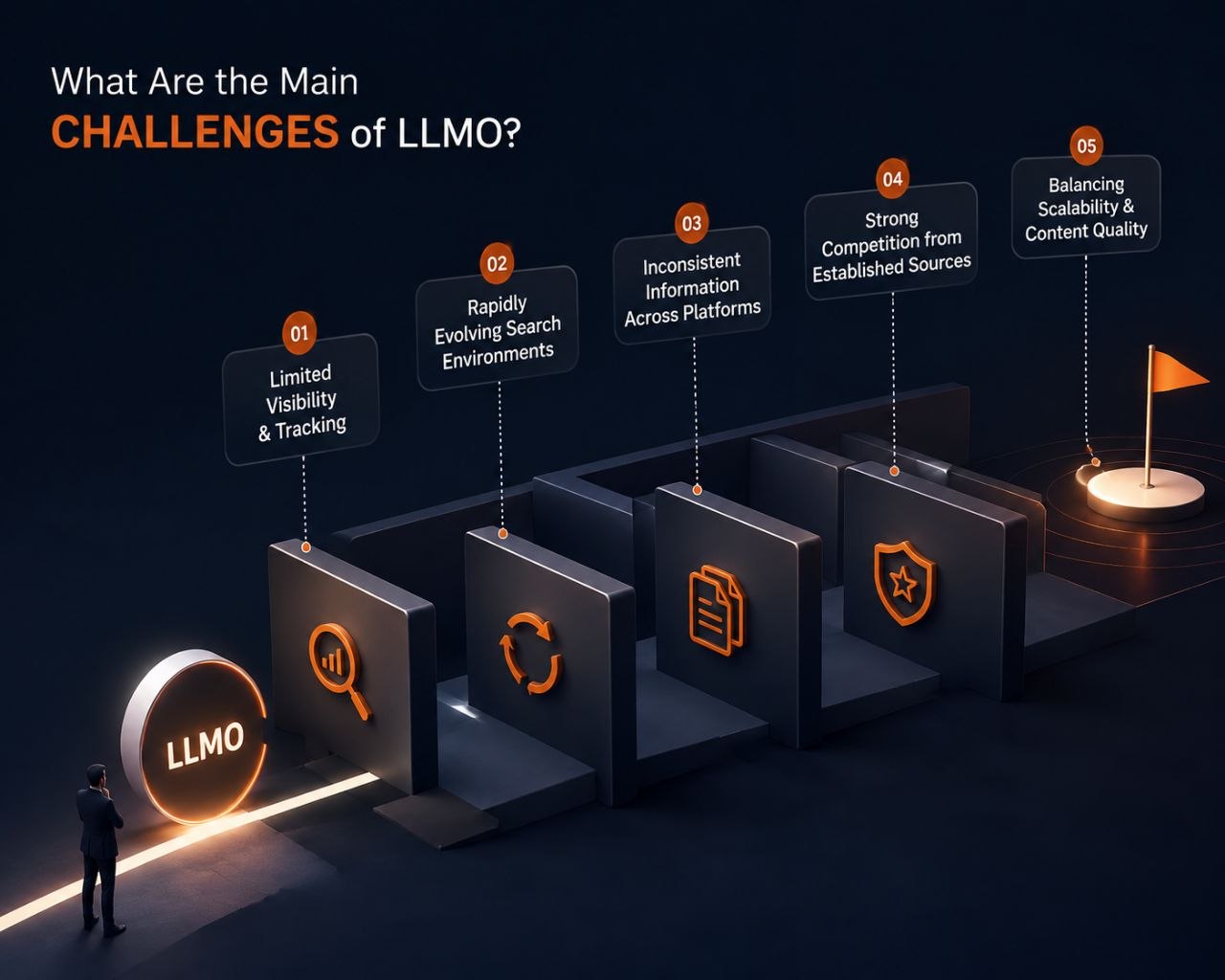
LLMO gives many chances to improve AI visibility, but it also has some challenges. Businesses often have trouble tracking results, keeping information the same everywhere, and keeping up with fast-changing AI search.
Below are some of the biggest challenges businesses face when using an effective LLMO strategy.
1. Limited Visibility Tracking
One of the biggest challenges in LLMO is measuring success. Old-style SEO gives ranking reports, impressions, and clicks, but AI platforms often do not show how or why they picked certain information.
This makes it hard for businesses to fully track AI mentions and know how often their content shows up in AI-made answers.
2. Rapidly Evolving Search Environments
AI search technology changes very fast. Models, ranking systems, and the ways AI creates answers get updated often. This means optimization plans may need regular changes.
Businesses need to stay updated on new changes so their AI search optimization work keeps working well over time.
3. Maintaining Consistent Information Across Platforms
Large language models collect information from many different places. If company details, product information, or brand messages are different from platform to platform, AI systems may find it hard to know which version is correct. Popular large language models examples, like ChatGPT and Gemini, all pull details from many sources in a similar way.
Keeping information the same everywhere helps build trust, helps AI recognize your brand, and improves large language model search visibility.
4. Competing Against Established Industry Sources
Well-known publishers, research groups, and trusted websites often get noticed more by AI systems. Smaller brands may find it hard to compete for visibility.
To beat this challenge, businesses need strong signs of expertise, full coverage of a topic, and high-quality information that clearly shows real authority.
5. Balancing Scalability and Content Quality
Many businesses want to publish more content to grow their visibility. But making a lot of content without keeping the quality high can make it work less well.
Good AI content optimization means balancing how much you publish with accuracy, depth, usefulness, and trust.
How Can Businesses Build an Effective LLMO Strategy?
Building a good LLMO strategy takes more than just posting content often. Businesses need to make information that AI systems can easily understand, trust, and connect to related topics. A strong strategy focuses on authority, consistency, relevance, and long-term visibility in AI-driven search. This shows the true llm optimization meaning: helping AI systems see real expertise.
Below are the key strategies that help businesses improve LLMO performance, grow AI visibility, support AEO, and get a better chance of being used by large language models.
1. Creating Comprehensive Topic Coverage
Large language models understand content better when a topic is explained fully and clearly. Businesses should cover related questions, ideas, and smaller topics so AI systems can understand the whole meaning of the content.
This helps AI systems connect information better. It also helps with AEO, making content show up more in AI-generated answers and search results.
2. Establishing Subject-Matter Authority
AI systems trust content that shows clear knowledge in one subject. Businesses should share useful, correct, and simple explanations that clearly show expertise and real understanding.
When content shows strong expertise, AI models are more likely to use it in their answers. This improves visibility in AI search systems overall.
3. Developing Strong Content Ecosystems
A strong content ecosystem means connecting different pages that explain related ideas. Blogs, guides, and support pages should work together so users and AI can easily understand the full topic.
This helps AI systems see strong links between pages. It also improves how well content is understood across search platforms.
4. Improving Information Consistency Across Channels
Businesses must keep their information the same across websites, social media, and other platforms. If details keep changing, AI systems may get confused about what is correct or reliable.
Information that stays the same builds trust and helps AI understand better. It helps search systems read and trust content more easily.
5. Continuously Refining Content Performance
LLMO strategies need to be updated over time. This means improving content, fixing mistakes, and adding new information. This keeps content useful and fresh for both users and AI systems.
Regular updates help improve accuracy and long-term visibility. They make sure content stays useful as AI search keeps changing.
AI search is becoming a key growth channel for global brands
Explore how top AI SEO agencies help brands generate growth
Final Thoughts
LLMO is changing how people find information online. Today, AI systems like ChatGPT and other search tools read and understand content to give direct, chat-style answers. Because of this change, businesses need to create clear, organized, and simple content that AI systems can easily understand and use.
Companies that start using LLMO early will have a better chance of staying visible in AI-generated search results. They can show up more often in AI answers, get found more easily, and reach people in a more natural way across modern search tools. Understanding what is LLMO early gives companies a real advantage as AI search keeps growing. Many teams now also treat llm optimization (seo) as a key part of their long-term content plan.
Qoulomb is an AI SEO and GEO agency that helps brands get good leads and revenue by improving visibility on both Google and AI engines. Through LLMO-focused strategies, it helps businesses build a stronger AI search presence, long-term digital growth, and smarter llmo marketing.
Frequently Asked Questions (FAQs)
1. What is LLMO and why is it important?
LLMO (Large Language Model Optimization) means improving content so AI systems can understand, trust, and use it better. It matters because AI-powered search tools are becoming a big way people find information. This makes AI visibility optimization very valuable for businesses.
2. How does Large Language Model Optimization work?
Large Language Model Optimization works by making content clearer, covering topics fully, building strong entity links, improving information quality, and organizing content well. These changes help AI systems understand information more correctly and help AI models find your content more easily on chat-style search platforms.
3. What is the difference between LLMO and GEO?
LLMO focuses on helping large language models understand and judge information. Generative engine optimization (GEO) focuses on showing up more inside AI-generated answers. Both support AI search optimization, but they work on different steps of how AI systems process and share information.
4. Why are businesses investing in LLMO?
Businesses are investing in LLMO because the way people search is changing. More people now use AI chat tools to find answers. Strong LLM optimization strategies help brands improve visibility, build stronger authority, and stay competitive as AI-powered search keeps growing.
5. What are the main challenges of LLMO?
Some of the biggest challenges are limited ways to track performance, AI systems that change fast, keeping information consistent, strong competition from well-known sources, and balancing how much content you make with how good it is. These challenges need ongoing checking and constant optimization work.
6. How can companies improve their LLMO strategy?
Companies can improve their LLMO strategy by fully covering topics, building authority, creating strong content ecosystems, keeping information consistent, and updating content often. These steps help strengthen large language model search visibility and improve AI content optimization results.
7. Does LLMO help improve AI search visibility?
Yes. LLMO helps improve AI search visibility by making information easier for large language models to understand and use. Strong content structure, entity recognition, topic connections, and good information quality all help improve visibility across AI-driven search.